Custom Packaging Planning: Complete Project Checklist
Custom packaging planning starts with aligning business goals, product needs, and launch constraints. A successful project balances protection, user experience, brand expression, and practical production decisions. Prioritize requirements that will change cost, lead time, or manufacturability—materials, protective performance, order quantities, regulatory needs, and where the packaging will be sold or distributed. Early alignment on those factors makes subsequent design, prototyping, and production planning choices measurable and manageable.
Define Scope, Goals, and Audience before Design
Which outcomes matter most: shelf impact, unboxing experience, cost per unit, or simple protection for transit? Document clear acceptance criteria for each. Define the target audience, intended retail presentation, and distribution channels. For entertainment and specialty products consider seasonal timing, collector expectations, and constrained retail footprints. Capture minimum functional requirements such as product dimensions, weight, fragility, and any temperature or humidity limits. When appropriate, involve merchandising, sales, and customer support early so packaging decisions reflect real tradeoffs between display appeal and operational constraints. For projects that require specialized formats or presentation, consider engaging Entertainment & Specialty Packaging services to align creative direction with manufacturing feasibility.
Translate Product and Regulatory Requirements into Technical Specs
Turn business requirements into measurable technical specifications: finished carton dimensions, stacking strength, burst and edge crush values for corrugated, moisture and UV resistance, food-contact or cosmetic compliance, and recyclable content targets. Include tolerances for fit and closure performance. If product variations exist (different SKUs or limited editions), specify which components are shared and which are unique. This reduces surprises during production planning and helps estimate tooling needs. List any labeling or barcode requirements, supplier traceability expectations, and country-of-sale regulations that could affect material selection.
Design and Prototyping: Make Decisions that save Time and Cost
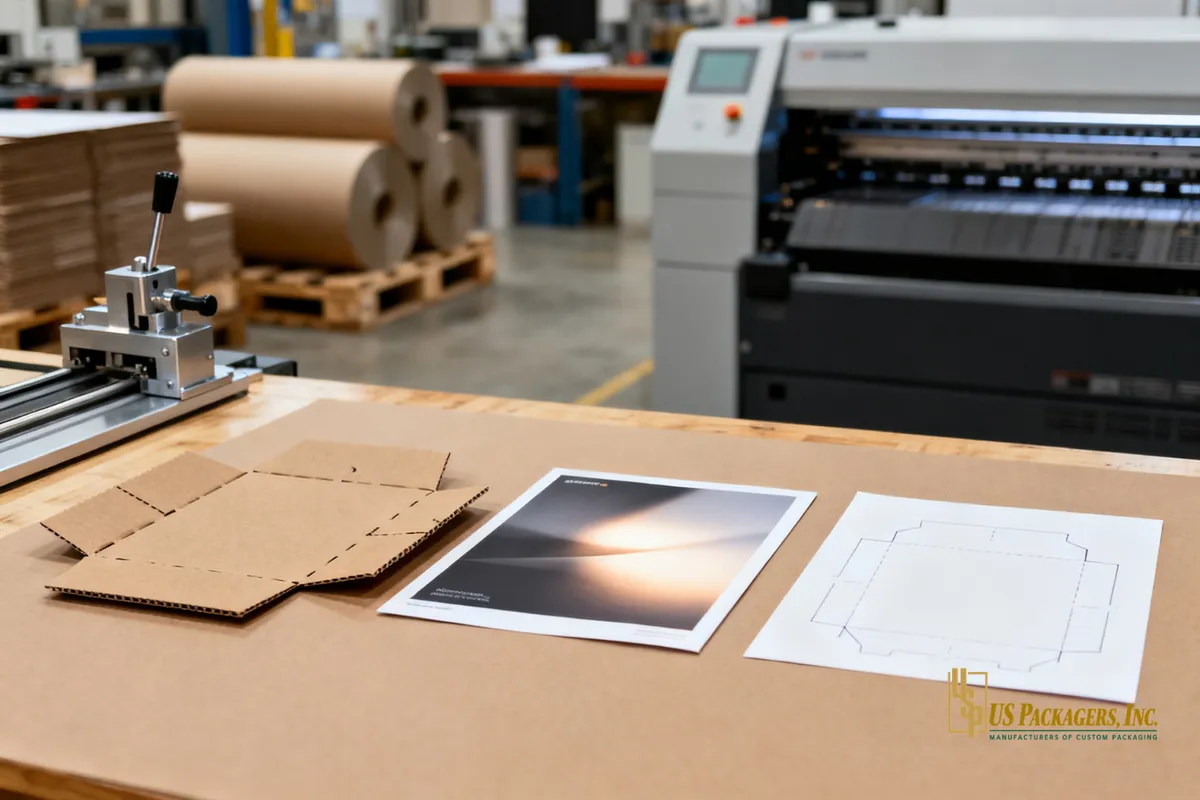
Packaging development works best when design, engineering, and prototyping are sequenced to reduce iteration. Start with dielines and structural concepts that meet the technical specs, then move to low-cost prototypes to validate fit and handling before committing to final print proofs or tooling. Prototype multiple levels: mockups for size and ergonomics, printed proofs for color and brand alignment, and functional prototypes for drop and compression testing. Define acceptable test methods and pass/fail criteria up front so the team knows when a prototype is ready to advance. Keep stakeholder review cycles short and scheduled; unclear feedback prolongs development and increases prototyping costs.
Production Planning and Manufacturing Readiness
Decide manufacturing approach based on volumes, complexity, and budget. Small runs and frequent design changes suit digital print and flexible finishing. High-volume or consistent designs usually justify conventional tooling and offset or flexo printing. Include tooling considerations—dies, molds, or embossing plates—within cost estimates. Consider minimum order quantities, material lead times, and seasonal demand that could affect availability. Build quality control checkpoints into the production plan for incoming materials, first-article inspection, and run sampling. For brands that need close coordination between design and production, evaluate whether a single partner can manage both creative and manufacturing stages; for many specialty projects that combination streamlines revisions and reduces handoffs. If production scope reaches beyond initial design and prototyping phases, include Custom Packaging options in vendor evaluations to ensure manufacturing alignment with project goals.
Schedule, Milestones, and Cross-Functional roles
Map the project timeline with milestones tied to decisions: final specs, prototype approval, tooling sign-off, material purchase, production start, and delivery windows. Assign accountable owners for each milestone and set realistic review intervals. Add buffer time for testing failures and material substitutions. Coordinate external stakeholders such as co-packers, freight providers, and retail partners to confirm receiving constraints and labeling requirements. Clear ownership reduces the risk of scope creep and missed launch dates.
Risk Assessment and Contingency Planning
Identify risks that could derail launch: material shortages, failed testing, tooling revisions, or shipping delays. For each risk, define a contingency: alternate materials with comparable performance, additional prototype iterations budgeted, or flexible production scheduling that permits split shipments. Quantify the cost and time impact of common risks so decisions can be prioritized against business value. Where compliance or safety is essential, add third-party testing and retain documentation for audits.
Custom Packaging Planning Checklist
Project scope: Define goals, audience, channels, and acceptance criteria.
Product specs: Document dimensions, weight, fragility, and handling needs.
Regulatory needs: Identify food-contact, cosmetic, or labeling requirements.
Brand and design constraints: List mandatory brand elements, color tolerances, and print finishes.
Performance requirements: Specify drop, compression, moisture resistance, and stacking limits.
Material options: Evaluate substrates, coatings, and recyclability options tied to performance and cost.
Prototyping plan: Define prototype levels, test methods, and approval criteria.
Tooling and artwork: Confirm dielines, artwork formats, and tooling needs ahead of sign-off.
Production forecast: Determine initial order sizes, reorder cadence, and scaling plan.
Quality plan: Set incoming inspection, first-article approval, and sampling frequency.
Logistics: Verify palletization, carton quantities, freight mode, and destination requirements.
Timeline and owners: Assign milestone owners and include contingency windows.
Businesses looking for additional packaging insights can also read Entertainment & Specialty Packaging for more practical guidance.
Frequently Asked Questions about Planning a Packaging Project
How soon should prototyping begin?
Begin low-fidelity prototyping as soon as core dimensions and protection needs are confirmed. Early mockups validate fit and ergonomics and prevent late-stage structural changes that are costly to fix.
How many prototype iterations are typical?
Iterations vary by project complexity. A basic carton may need two to three rounds: structural mockup, printed proof, and a functional production-representative prototype for testing.
When is tooling necessary?
Tooling becomes necessary when production volumes or finishing techniques require dies, molds, or plates that ensure repeatable accuracy. If a design will be produced long-term at scale, tooling usually reduces per-unit cost despite upfront investment.
What should be included in production planning?
Include confirmed materials and suppliers, quality checkpoints, minimum order quantities, lead times, packaging for shipping, and a contingency plan for substitutions or rate changes.
Packaging Planning that supports Launch and Long-term Operations
At US Packagers, we Create Specialty Packaging that aligns with product requirements, brand goals, and production realities, while keeping deliverables clear for every stakeholder involved. Our approach brings design, materials, functionality, manufacturing, and presentation together to create packaging solutions that support the product from concept through production and launch.
