Event Welcome Kits: How to Create Better First Impressions
Event welcome kits matter because they are the first physical touchpoint many attendees have with a brand or event. A well-planned kit reduces attendee friction, communicates the event’s tone and priorities, and turns arrival into an intentional experience. The practical decisions that determine whether a kit feels thoughtful or wasteful include item selection, packaging format, distribution method, and how the kit supports the event agenda. This guide explains those tradeoffs and supplies actionable guidance for marketing, operations, and procurement teams planning event welcome boxes and conference kits.
What a welcome kit must do for an event
Before choosing materials or print finishes, clarify the primary purpose of the kit. Does it orient attendees to the schedule, protect and deliver samples, act as a brand stimulation tool, or support sustainability goals? Each objective leads to different design and fulfillment decisions. For example, orientation and information favor a compact welcome box with clear labeling and inserts; product sampling favors protective inner packaging and smaller compartments; brand stimulation favors a more curated unboxing sequence with premium touches. Aligning purpose to content early prevents scope creep and unnecessary cost.
Operational requirements follow from purpose. If most attendees will pick kits on-site, focus on tote-friendly formats and surface durability. If kits must ship beforehand, prioritize shipping strength, weight minimization, and customs-friendly contents. For integrated on-site distribution that includes registration counters or baggage drops, plan for modular components that can be added or removed quickly. For teams seeking an outside partner to coordinate these requirements, consider professional Event Kit Packaging support to translate event objectives into packaging specifications.
Choosing the right format and contents for memorable conference kits
What contents will create value without creating waste? Start with a short list of high-utility items. Useful choices include a printed agenda or welcome card, a lanyard or badge holder, a reusable container for samples, a small notebook and pen, chargers or cables when appropriate, and one or two branded giveaways that reflect the event theme. Avoid filling space with low-value items just to hit a volume target. Curated, purposeful contents make the kit feel intentional.
Decide on format based on content size and distribution: welcome boxes work well when multiple sample products or rigid items are included; flat folio envelopes or paperboard mailers are efficient for documents and thin items; soft totes or drawstring bags are useful for on-site carrying and have perceived reuse value. Consider branded giveaways in context. Branded items can reinforce identity, but the perceived value depends on quality and relevance. A single useful giveaway will often have more brand impact than several low-cost trinkets.
How unboxing design influences first impressions
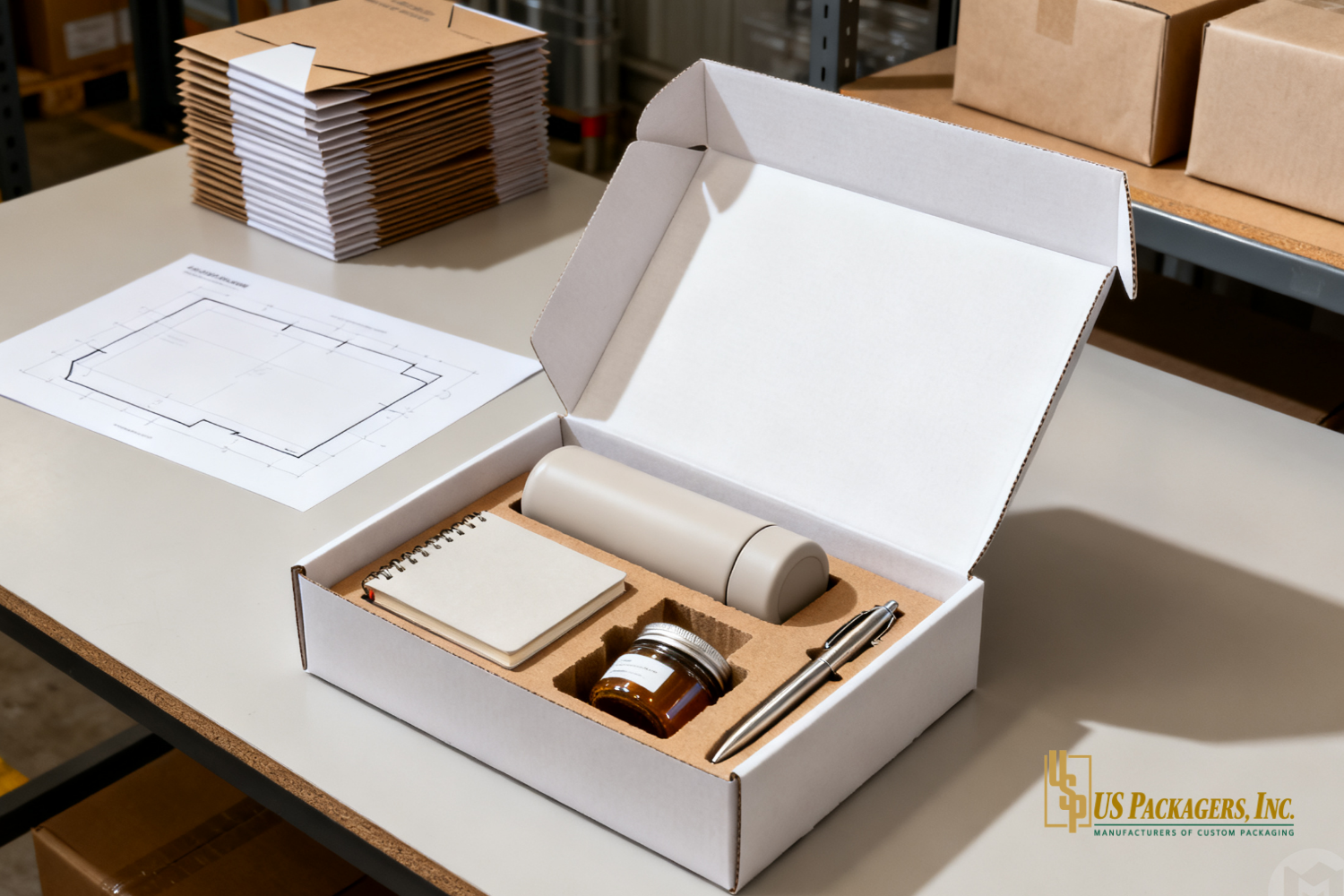
Which unboxing moments matter most? The sequence of revealing, tactile materials, and clarity of contents shape perception. A simple insert that labels items and explains value reduces attendee confusion. Structural decisions matter: a box with internal compartments prevents products from shifting and arriving damaged. For premium presentation, printed or colored tissue, a branded sticker seal, or a single-panel printed sleeve can elevate perception without large cost increases. Prioritize durability where items will ship, and choose finishes that survive handling while matching brand tone.
Businesses looking for additional packaging insights can also read Event Kit Packaging for more practical guidance.
Design, manufacturing and budget tradeoffs for event kits
Which production choices balance quality and cost? Material selection, print complexity, dieline choices, and in-house versus outsourced manufacturing each affect both price and timeline. Corrugated mailers and folding cartons are cost-effective for larger kits; rigid boxes give a premium feel but require higher unit costs. Print options such as full-color digital printing work well for runs under a few thousand units, while flexo or litho is more economical for larger runs with simpler color sets. For teams that need coordinated design and manufacturing support, partnering with a provider that offers both design and production services simplifies communication and reduces rework. Review design-to-production samples early and specify tolerances for print registration and color where brand consistency is important. If bespoke inner trays or inserts are required to protect samples, include those in early quotes to avoid surprises.
When custom dielines, inserts, or multiple printed panels are necessary, a packaging partner who controls production can test prototypes and iterate quickly. That integration reduces the risk of mismatched expectations between creative and manufacturing teams. For organizations evaluating a production partner with these capabilities, consider options that include both design and manufacturing under a single service offering such as Custom Packaging to keep specifications aligned from concept through delivery.
Fulfillment, distribution, and sustainability considerations
How kits reach attendees changes packaging requirements and cost. On-site distribution simplifies shipping but requires staging space, organized check-in flows, and staff for assembly or bagging. Pre-shipping requires attention to carrier rules, package dimensions, declared value, and fragile item protections. For mailed kits, choose mail-friendly formats and test sample shipments for dimensional weight impacts. Consider folded formats or partial disassembly to reduce dimensional weight charges when shipping at scale.
Sustainability choices influence packaging material selection and attendee perception. Recyclable paperboard, mono-material laminates, and reusable containers reduce waste and may align with brand values. However, sustainable materials sometimes have different strength and print characteristics, so test prototypes for durability and finish. Where sustainability is a priority, communicate it clearly in the kit so recipients understand why materials were chosen.
Frequently asked questions about event welcome kits
How many items should a welcome kit include?
Direct answer: Keep the kit focused. Aim for three to six meaningful items plus a clear informational insert. Explanation: Too many items dilute perceived value and increase packing complexity. Prioritize usefulness and alignment to the attendee experience.
Should kits ship before the event or be handed out on-site?
Direct answer: Choose based on attendee needs and logistics. Explanation: Ship when attendees cannot attend in person or when pre-engagement is part of the experience. Choose on-site distribution to create a branded arrival moment, avoid shipping costs, and reduce lost packages.
What packaging materials protect samples without feeling wasteful?
Direct answer: Use right-sized boxes with tailored inserts. Explanation: Custom inserts or die-cut compartments prevent movement and reduce the need for excess void fill. Select recyclable or reusable materials where possible to minimize waste while maintaining protection.
How should a team validate kit design before full production?
Direct answer: Prototype and test at small scale. Explanation: Produce a handful of physical samples and run them through the actual distribution scenario. Check fit, durability, unboxing order, and packing time. Iterate until the prototype meets both brand and operational requirements.
Measuring how packaging supports the attendee experience
At US Packagers, one of the most important objectives is to align packaging choices to event goals, whether that means protection and shipping, a premium unboxing moment, or sustainable materials that reflect brand values. Collaborative planning between marketing, product, and operations teams ensures the final kit supports Build Your Event Kit, registration workflows, shipping budgets, and on-site logistics while reinforcing the brand impression attendees carry beyond the event.
