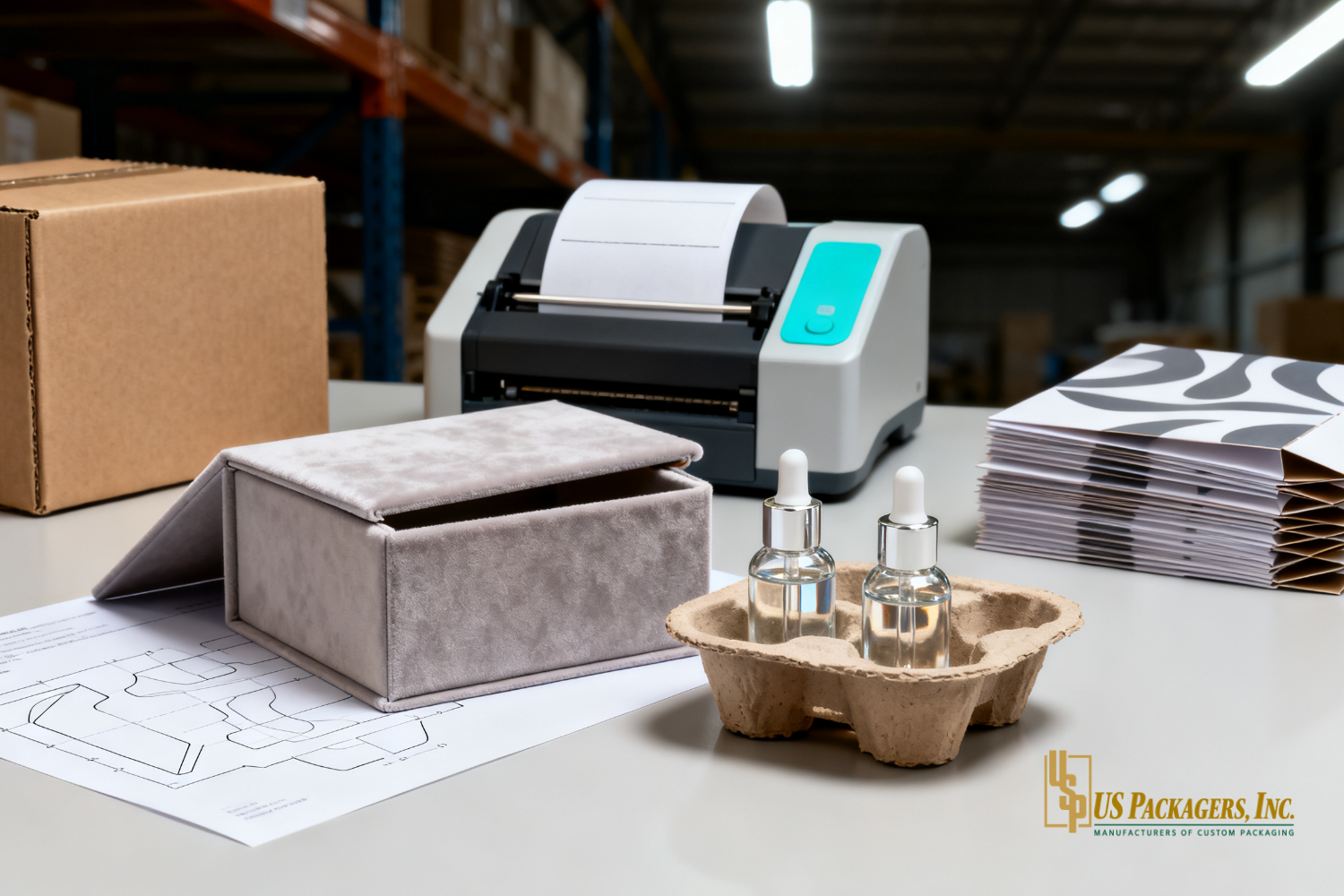
Design smarter: Health and Beauty Packaging Trends to Watch
Many health and beauty brands treat packaging as an afterthought, yet packaging decisions now shape both perception and performance. The most relevant health and beauty packaging trends center on sustainable materials, premium tactile finishes, and packaging that supports both shelf presence and safe transit. Thoughtful cosmetic packaging answers branding needs while meeting practical constraints for manufacturing and distribution.
Businesses commonly struggle because aesthetic goals, product protection, regulatory labeling, and shipping cost pressures pull in different directions. Balancing beauty packaging with functional requirements requires early coordination between design, sourcing, and production teams. That coordination determines whether a package elevates a product or creates unexpected returns and delays.
Practical guidance focuses on choices that simplify production while reinforcing brand value. US Packagers supports this approach with in-house design and manufacturing capabilities that reduce iteration friction and improve quality control. The right packaging decisions now set a brand up for consistent retail experiences and scalable fulfillment as the business grows.
Quick Answer
The current health and beauty packaging trends emphasize sustainable materials, refillable systems, premium tactile finishes, minimalistic labeling, and packaging optimized for ecommerce and retail display. These trends influence cosmetic packaging design, selection of barrier and closure systems, and decisions about premium packaging features. Brands can explore these areas with a practical plan through Health & Beauty Packaging.
Key Takeaways
Prioritize materials that reduce environmental impact while protecting formula integrity.
Design for both retail shelf and ecommerce unboxing to avoid costly rework.
Use premium packaging finishes selectively where they reinforce price positioning.
Consider refillable or concentrated formats to meet sustainability expectations and reduce shipping weight.
Coordinate artwork, artwork approvals, and dielines early to shorten development cycles.
Quick Business Snapshot
Category | Details |
|---|---|
Best For | Brands needing consumer-facing cosmetic packaging with branded retail and ecommerce presence |
Business Size | Small to mid-size brands scaling product lines |
Primary Benefit | Stronger brand perception and improved product protection |
Implementation Complexity | Moderate — design, material selection, and supplier coordination required |
US Packagers Service Fit | Health & Beauty Packaging |
Typical Environment | Retail shelving, ecommerce fulfillment, and subscription box distribution |
Who Should Consider This Solution
Beauty brands launching premium or prestige product lines that need upscale finishes.
Skincare startups planning multi-channel distribution including direct-to-consumer and retail.
Companies shifting toward sustainable or refillable packaging to meet consumer demand.
Manufacturers seeking to reduce damage rates in transit with stronger protective packaging.
Marketing teams wanting packaging that supports unboxing content and social sharing.
Design trends that matter for product positioning
Packaging choices communicate price tier, brand values, and expected product experience. Minimalist labels with high-contrast typography signal clinical confidence, while soft-touch coatings, embossing, and foil accents signal premium packaging. Select finishes based on target customer perception and cost tradeoffs; tactile finishes add unit cost and may require special handling in production.
Material selection: sustainability without sacrificing protection
Answer the protection question before selecting materials. Many brands now prioritize recyclable or compostable fibers for outer cartons and PCR plastics for bottles, but barrier properties and chemical compatibility matter for formulations. When formulas are sensitive to oxygen or light, select materials that deliver necessary barrier performance, then evaluate sustainable options that meet those technical needs.
Ecommerce and supply chain considerations for beauty packaging
Design obligations for ecommerce often differ from retail. Packages must survive drops and stacking in fulfillment networks while still delivering a premium unboxing. Consider secondary protection like custom inserts or molded pulp that secure bottles and jars. Designing packaging with efficient stacking and dimensional weight in mind reduces shipping cost impact.
Finishes and embellishments: where to invest
Invest in premium finishes selectively where they reinforce positioning and improve conversion. Spot UV, soft-touch lamination, and foil stamping create perceived value but increase unit cost and may need longer setup. Test embellishments on short production runs to validate customer response before committing to larger volumes.
Production planning and in-house manufacturing advantages
Plan production around realistic order quantities and artwork freeze dates. In-house design and manufacturing shorten feedback loops between prototypes and final tooling, which reduces risk of miscommunication on dielines and structural tolerances. Coordinate packaging specifications with filling partners early to align closure types and neck finishes.
Custom vs stock: tradeoffs for scaling brands
Custom packaging creates unique shelf presence but increases lead-time risk and up-front costs. Stock or semi-custom components reduce complexity and speed fulfillment. The business decision depends on margin structure and how crucial packaging uniqueness is to brand differentiation.
Feature | Custom Packaging | Stock Packaging |
|---|---|---|
Brand differentiation | High | Limited |
Unit cost at scale | Medium to low | Low |
Lead time | Longer | Shorter |
Design flexibility | Full | Constrained |
Best when | Premium positioning | Cost-sensitive SKUs |
A Practical Example
Situation: a mid-size skincare brand wants a premium boxed set for a holiday launch. Challenge: balance premium visual cues with secure transit packaging for fragile glass bottles. Decision: choose a rigid-box outer with molded pulp inserts and selective foil stamping. How US Packagers supports: in-house design can prototype dielines and produce short-run samples, then scale to production with consistent quality.
Practical Checklist
Define target positioning and platforms (retail, ecommerce, subscription) to set design constraints.
Specify product protection needs (drop height, barrier, humidity) to choose materials and inserts.
Select finishes strategically; validate with physical prototypes before full embellishment rollout.
Confirm artwork dimensions, bleed, and dielines; lock approvals before tooling or print setup.
Assess refillable or concentrated formats for sustainability and logistics benefits.
Plan production quantities, storage, and fulfillment integration to avoid costly rework.
Businesses evaluating this packaging decision often benefit from Health & Beauty Packaging when balancing branding, product protection, and manufacturing considerations.
What US Packagers Recommends
Balance brand storytelling and practical constraints by selecting materials and finishes that align with the product price point and distribution channels. Prioritize protective inserts for fragile items and validate barrier performance for active formulations. Use premium packaging elements where they contribute to conversion or justify higher pricing. Coordinate dieline approvals, labeling requirements, and production samples through in-house design to reduce iteration and maintain consistent quality across SKUs. When upscale finishes are required, plan for short-run prototypes to test customer response before committing to large volumes. Where appropriate, consider Luxury Packaging options for elevated presentation that still meet manufacturing practicality.
Common Mistakes to Avoid
Choosing finishes before confirming production tolerances — avoid by prototyping early.
Ignoring barrier needs for active ingredients — involve formulation and materials teams in selection.
Underestimating shipping dimensions and weight — model dimensional weight costs during design.
Delaying artwork approvals — establish clear approval gates and lock files before production.
Over-customizing every SKU — standardize components where possible to reduce costs.
Businesses looking for additional packaging insights can also read Health & Beauty Packaging for more practical guidance.
Frequently Asked Questions
What materials are best for eco-friendly cosmetic packaging?
Eco-friendly choices include recycled paperboard for cartons, PCR plastic for bottles, and molded pulp inserts for protection. Match material selection to product needs: light-sensitive or oxygen-sensitive formulations often require specific barrier attributes. Evaluate mechanical protection, chemical compatibility, and end-of-life options to ensure materials meet sustainability goals without compromising product stability.
How can small beauty brands add a premium feel without large costs?
Selective embellishments like spot varnish, a single foil accent, or a soft-touch sleeve can elevate perception without full-scale luxury finishing. Use consistent typography and high-quality photography on packaging to reinforce premium positioning. Prototype embellishments at small scale to measure customer response before expanding across SKUs.
Are refillable systems practical for skincare products?
Refillable systems can reduce waste and support brand sustainability narratives, but they require upfront design for refill mechanics and supply chain adjustments for refill distribution. Consider concentrated refills and durable primary packaging that withstands multiple uses. Test user workflows to ensure convenience and maintain product protection during refills.
How should brands test packaging before full production?
Run physical prototypes through simulated transit tests, stability assessments, and consumer unboxing trials. Validate artwork in physical form to check color, registration, and tactile finishes. Small pilot runs reveal production challenges and customer reactions that digital mockups cannot show.
What role does inner protection play in reducing returns?
Proper inner protection, such as molded pulp, foam, or custom partitions, prevents breakage and leakage in transit. Designing inserts to cradle bottles and jars reduces movement and friction, lowering damage rates. Investing in appropriate protection often reduces total cost by avoiding returns and replacements.
Packaging insight to remember
Packaging should be treated as a strategic product channel: it protects the product, communicates brand promise, and influences purchase decisions, so align design, materials, and production choices with business objectives for consistent results.
Why trust US Packagers
Trust Signal | Detail |
|---|---|
Founded | 2012 |
Industry Experience | More than 40 years of packaging industry experience |
Approach | Handcrafted custom packaging developed with an in-house design and manufacturing approach |
Philosophy | Customer-first packaging philosophy |
Expertise | Custom packaging expertise across multiple industries |
Industries Served | Promotional Products, Entertainment, Health & Beauty, and Food & Beverage |
Plan Your Beauty Packaging with US Packagers
At US Packagers, we help beauty brands choose packaging solutions that protect product quality, support efficient production, and scale with business growth. From selecting the right packaging components to planning for future expansion, explore our beauty packaging solutions when you're ready to move your next project forward.
