Reduce Shipping Damage with Protective Packaging Strategies
Packaging teams see shipping damage as a predictable cost that can be materially reduced with the right protective packaging and packing strategy. Protective packaging minimizes movement, cushions impacts, and prevents abrasion — all while supporting brand presentation — which is why product packaging choices matter as much as the product itself for shipping performance.
Many businesses struggle because packaging decisions are made separately from fulfillment planning. A mismatch between branding, product protection, customer experience, shipping carriers, and production planning creates weak points that manifest as damaged returns, customer complaints, and higher freight costs.
Practical packaging advice starts with a clear product-risk assessment and ends with a validated pack method. With in-house design and manufacturing, US Packagers provides product packaging solutions that align protection, brand, and fulfillment needs for better shipping outcomes and predictable results.
Quick Answer
Combine the right outer shipping package with internal cushioning, secure orientation, and validated pack specifications to lower damage rates and reduce returns. Businesses looking for a tailored approach can explore our Product Packaging solutions for packaging designed around real shipping conditions.
Key Takeaways
Match internal cushioning and bracing to product fragility and expected shipping hazards.
Choose packaging materials that balance protection, weight, and dimensional cost.
Standardize pack procedures and validate them with simple drop and vibration checks.
Consider custom packaging when product geometry or branding creates unique protection needs.
Collaborate between design, operations, and carriers before finalizing packaging specs.
Quick Business Snapshot
Category | Details |
|---|---|
Best For | Products needing tailored internal protection during transit |
Business Size | Small to mid-size brands and manufacturers scaling fulfillment |
Primary Benefit | Reduced shipping damage and improved customer experience |
Implementation Complexity | Moderate — requires testing and alignment with fulfillment |
US Packagers Service Fit | Product Packaging |
Typical Environment | Warehouse packing lines, e-commerce fulfillment, retail distribution |
Who Should Consider This Solution
Brands shipping fragile or irregularly shaped products that currently experience returns or breakage.
Food, beverage, and health & beauty companies needing sanitary protection and secure transit packaging.
Promotional product companies and entertainment projects with branded items that must arrive pristine.
Operations teams preparing to scale fulfillment volume or add new carrier lanes.
Product development teams refining packaging prior to a market launch.
How protective packaging reduces shipping damage
Protective packaging reduces shipping damage by addressing the three main causes of transit loss: impact, compression, and abrasion. For a business, that means quantifying the product’s weakest points and then selecting materials and geometry that control energy transfer. From a manufacturing standpoint, this translates into internal cushions, cradles, or inserts that prevent movement, outer cartons sized to limit collapse risk, and protective finishes that prevent surface scuffs. The business impact is measurable: fewer returns, lower replacement costs, and stronger customer confidence. Manufacturing choices include corrugated board grade and flute size, polyurethane or paper cushioning, molded pulp, and the decision to use custom-fit inserts versus modular void fill. Each choice trades material cost and production complexity against a specific reduction in damage risk, so aligning protection level with product value and margin is essential.
Selecting materials and internal protection that fit product risk
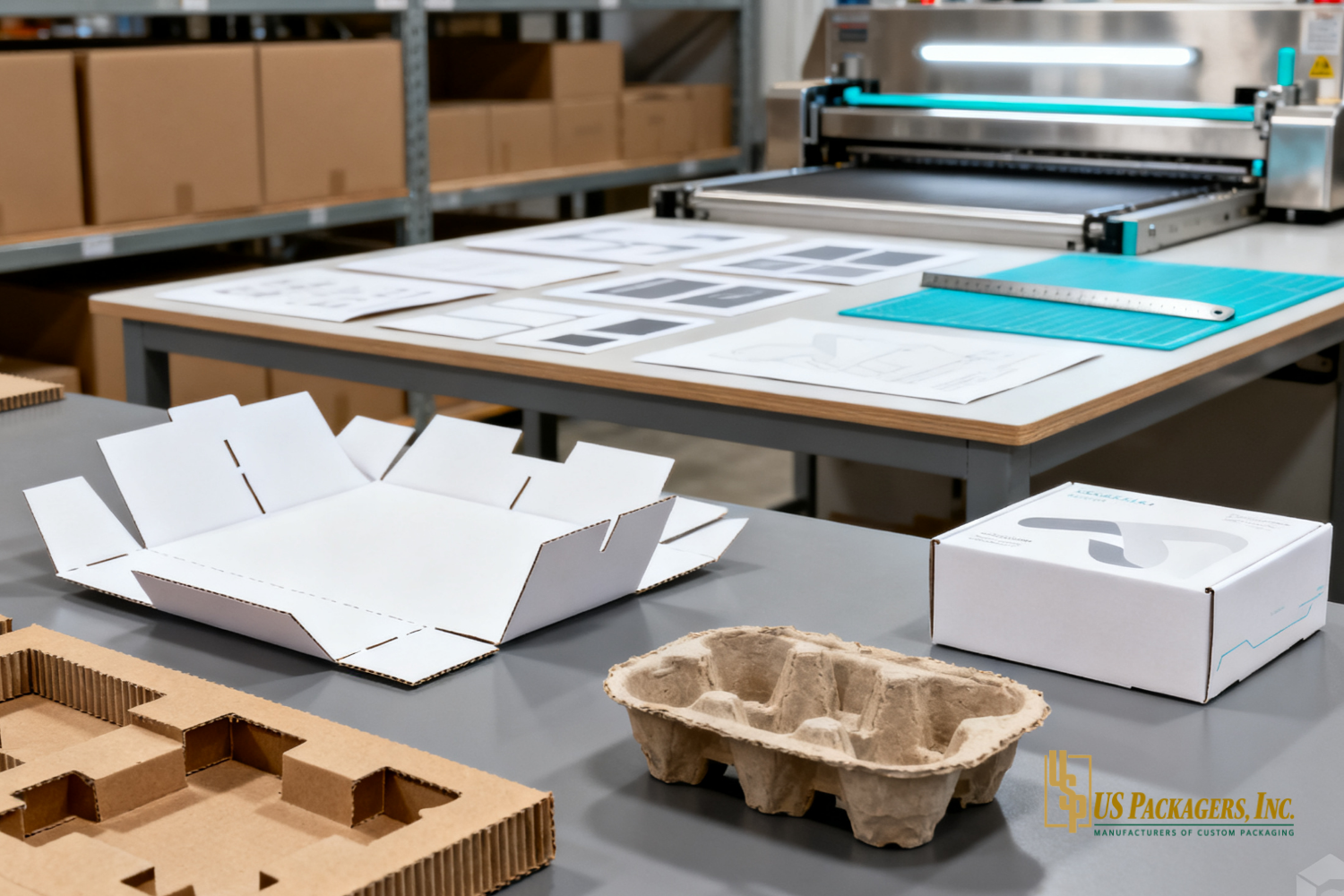
Begin with a direct assessment: the product’s fragility rating, weight, and geometry determine the internal protection strategy. Lightweight rigid products often need bracing and corner protection, while heavy but durable items benefit from compression-resistant cushioning. From a production view, choices include die-cut foam or corrugated inserts for repeatable, high-speed packing; molded pulp for sustainable cushioning; and paper-based void fill for irregular shipments. Consider how material behavior changes with humidity and stacking during storage and transit. Also evaluate how the chosen material affects dimensions and shipping weight because carriers charge based on dimensional or actual weight. Implement materials that integrate with automated or manual packing operations to maintain throughput and quality control.
Design decisions that reduce handling damage and returns
Design with the carrier and the pack handler in mind. Direct answer: orientation control, secure closures, and clear internal restraints reduce damage from rough handling. For businesses, that means designing pack procedures and structural features that prevent shifting during drop or tilt. Manufacturing details include specifying flaps and glue patterns that hold under repeated stress, adding internal tabs or interlocks that lock assemblies together, and selecting closure methods (tape, hot melt, or tamper-evident seals) appropriate for the product. Visual and tactile cues in the inner pack can speed accurate packing and lower human error. Evaluate how retail returns or restocking affect package durability and design for multiple open/close cycles when necessary.
Balancing cost, weight, and sustainability in protective packaging
Choose materials and design features that align protection needs with total landed cost and sustainability goals. Brands often default to thicker boxes or more fill, which can protect but also increase dimensional weight charges and material waste. A better approach evaluates protection per dollar and per pound. Use finite element thinking: targeted reinforcement at corners or contact points buys protection without overbuilding the entire package. Consider recycled or recyclable materials and assess lifecycle impacts. Manufacturing advantages of in-house production include rapid iterations to find the minimal effective packaging and the ability to substitute materials without long lead times. That balance reduces shipping damage cost-effectively while meeting sustainability commitments.
Testing, validation, and communicating fragility to carriers
Validate pack methods with simple, repeatable tests before committing to production. For business leaders, validated packaging reduces surprise damage rates when scaling. Practical tests include drop tests from typical handling heights, compression stacking tests, and simple vibration checks that mimic trucking or sorting equipment. Use test results to create a pack specification and operator checklist for fulfillment staff. Communicate fragility constraints to carriers and include orientation arrows, cushioning callouts, or handling instructions when needed. Clear pack specs also make it easier to onboard contract pack houses or seasonal staff while preserving product protection.
A Practical Example
A small-batch cosmetic brand shipping glass bottles reduced breakage by combining custom-fit corrugated partitions with recycled molded pulp cradles. The business situation involved fragile, high-value bottles shipped via mixed carrier networks. The packaging challenge was minimizing movement and contact between bottles without increasing parcel dimensions. The decision was between stock dividers and a custom insert. US Packagers’ Product Packaging service supported this decision by prototyping die-cut corrugated partitions and molded pulp inserts in-house for proofing. For products requiring tailored protection and branded presentation, Custom Packaging Solutions provide a scalable production-ready approach. The solution delivered predictable packing procedures for the fulfillment team and a repeatable manufacturing method that preserved branding and lowered damage claims during expansion to new carrier routes.
Comparison: Custom vs Stock Packaging
Feature | Custom Packaging | Stock Packaging |
|---|---|---|
Protection fit | Tailored inserts and bracing precisely match product | General void fill, less precise |
Brand alignment | Design supports unboxing and brand story | Limited branding options |
Cost per unit | Higher at low volume, optimized over time | Lower upfront, may increase damage costs |
Speed to market | Requires prototyping but allows fast iteration in-house | Immediate availability |
Scalability | Production scales with predictable quality | Scales easily but with limited differentiation |
Practical Checklist
Inventory product risk points: identify fragile areas, weight centers, and surfaces prone to abrasion.
Select internal protection: choose inserts, cushioning, or partitions matched to those risk points.
Right-size outer packaging: reduce empty space to limit movement while managing dimensional weight.
Prototype and test: run drop and compression tests on representative samples.
Document pack specs: create operator checklists and photos for consistent fulfillment.
Monitor damage rates post-implementation and iterate based on live data.
What US Packagers Recommends
Evaluate packaging decisions through the lens of product value and transit exposure. For many brands, a hybrid approach—custom internal inserts combined with standard outer cartons—delivers the best balance of protection, cost, and brand presence. Prioritize simple, repeatable pack processes and validate with a small set of tests before scaling. Use in-house prototyping to iterate quickly and keep manufacturing changes tightly coordinated with operations. Over time, shift to designs that reduce dimensional weight and minimize unnecessary materials while preserving protection and a consistent customer experience.
Common Mistakes to Avoid
Overpacking with excessive void fill; avoid by using targeted bracing instead of bulk fill.
Underestimating stacking and compression forces; avoid by testing cartons with expected pallet configurations.
Choosing materials without considering humidity or temperature effects; avoid by specifying material tolerances.
Designing packaging without pack-line input; avoid by involving operations early in the design process.
Failing to document pack specs; avoid by producing step-by-step packing photos and checklists.
Frequently Asked Questions
How does protective packaging reduce return rates?
Protective packaging reduces return rates by preventing the physical failures that trigger returns — breakage, leaks, and cosmetic damage. By restricting movement, cushioning impacts, and preventing surface contact, the packaging lowers visible and functional defects. Well-documented pack methods also reduce operator errors that lead to improper packing and subsequent returns.
When should a business choose custom packaging over stock options?
Choose custom packaging when product geometry, brand presentation, or protection needs cannot be met by off-the-shelf options. Custom is especially valuable for fragile items, multi-piece products that need separation, or when the unboxing experience is part of the brand promise. Evaluate volume and damage cost to justify custom tooling or inserts.
What simple tests validate a packing method?
Simple validation tests include controlled drop tests from typical handling heights, compression testing with stacked cartons, and a vibration test simulating trailer transit. These checks identify weak points in cushioning and closure and can be performed in-house or with a basic testing partner to create a repeatable specification.
How do packaging dimensions affect shipping damage risk?
Oversized boxes increase product movement and the chance of corner impacts, while undersized boxes can crush under stack loads. Correctly-sized cartons reduce shifting and help distribute compression evenly. Dimensioning also impacts carrier pricing, so finding the right fit reduces both damage risk and shipping cost.
Can sustainable materials provide the same protection as foam or plastic?
Sustainable materials like molded pulp and engineered paper can deliver equivalent protection when designed correctly. They often require thicker or more complex geometry but offer end-of-life benefits. Design and prototyping are important to ensure the sustainable option meets the same protective performance as traditional foams or plastics.
Packaging That Ships Without Surprises
Protective packaging is a practical investment that protects margin and reputation. Pairing clear product risk assessment with targeted internal protection and validated pack procedures turns packaging from a cost center into a predictable element of fulfillment.
Why Trust US Packagers
Attributes | Details |
|---|---|
Founded | 2012 |
Industry experience | 40+ years of packaging industry experience |
Manufacturing | Handcrafted custom packaging developed with an in-house design and manufacturing approach |
Philosophy | Customer-first packaging approach |
Expertise | Custom packaging development and product packaging |
Industries served | Promotional, entertainment, health & beauty, food & beverage |
Making Smarter Packaging Decisions
At US Packagers, packaging choices are treated as cross-functional decisions that require product, brand, fulfillment, and manufacturing input. When those elements are aligned, protective packaging both reduces damage and supports the customer experience. Review product fragility, simulate transit stresses, and use prototypes to confirm protection; then finalize a production-ready solution that integrates with your fulfillment workflow. Explore our Custom Packaging Solutions to understand how product, brand, customer experience, shipping requirements, and manufacturing considerations come together in a production-ready packaging strategy.
