Plan Luxury Brand Packaging for Product Launches: Align Presentation, Protection, and Logistics
Planning luxury brand packaging for a product launch begins with one question: what impression should the first physical interaction with the product create? The right answer aligns brand positioning, product protection, presentation, and fulfillment constraints so the unboxing feels deliberate and reliable. Prioritize the customer experience, protection needs, and operational realities together rather than treating finishes, structure, and logistics as separate decisions.
Define the Launch Goals and Customer Experience
Which customer segment will receive the product at launch, and what expectation of quality does that segment hold? Decisions about structure, materials, and presentation must map to commercial goals. For example, limited-edition gifts targeted at retail buyers will have different tolerances for cost and production complexity than subscription-based launches intended for repeat fulfillment. Clarify the desired emotional response: prestige, delight, functional confidence, or all three. Luxury brand packaging should express that response through visible cues such as texture and closure, and through invisible cues such as how well the item is protected in transit.
Translate Brand Positioning Into Packaging Requirements
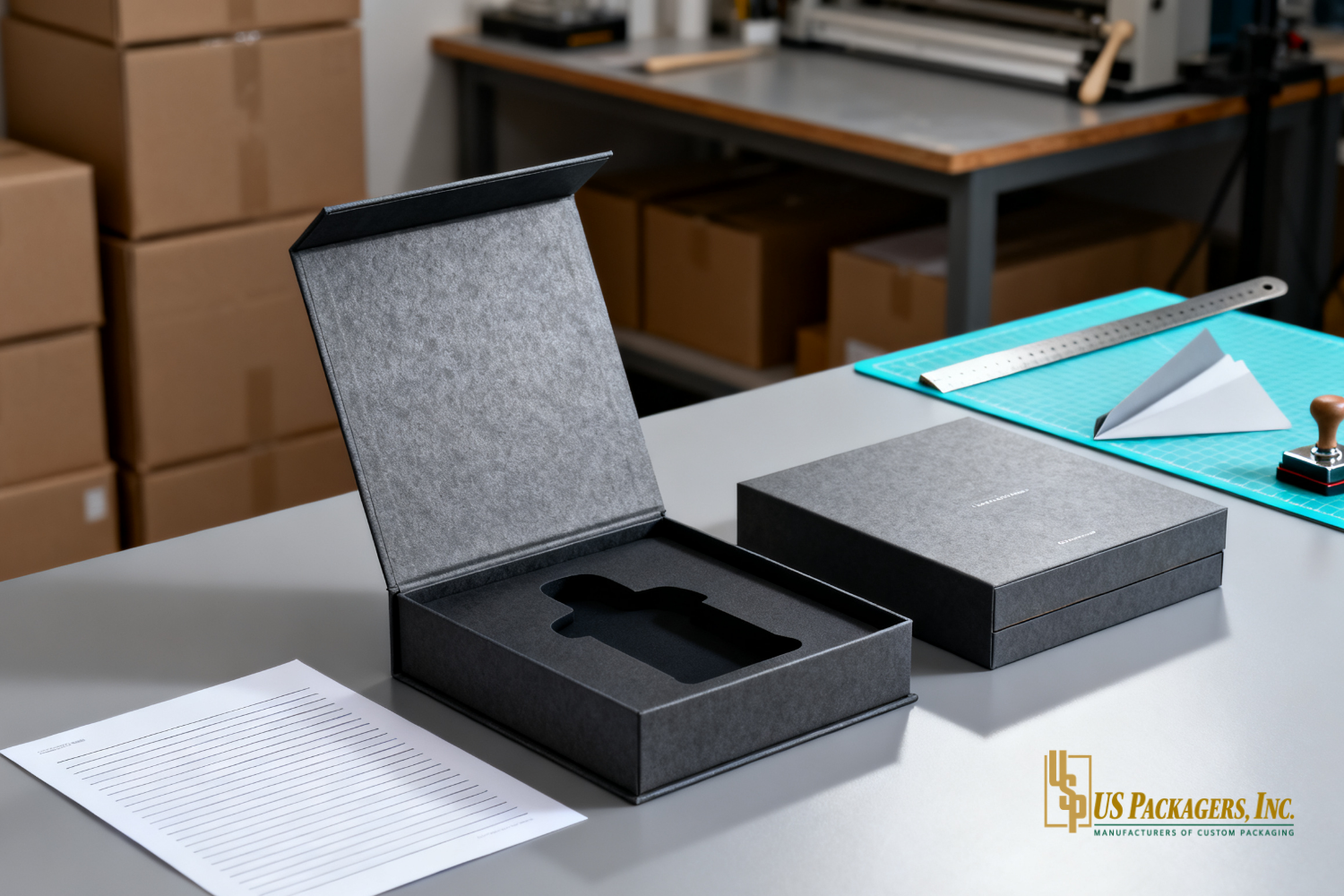
After defining goals, convert them into measurable packaging requirements. Typical dimensions include protection level, acceptable damage rate, perceived weight and heft, finish palette, and unboxing choreography. Protection requirements determine internal structures such as molded inserts, cradles, or wrapped layers. Presentation requirements guide materials and finishes: rigid boxes and multi-piece constructions communicate permanence, while thick folding cartons with specialty coatings can signal refinement at lower cost. These specifications inform both design and manufacturing choices.
Choosing the right luxury packaging helps align brand positioning, product protection, and presentation from the beginning of a premium product launch.
Tradeoffs To Consider Before Design Work
Durability versus perceived luxury: heavier or denser materials feel premium but raise shipping costs and may affect sustainability goals.
Complex closures versus repeatability: magnetic or ribbon closures elevate the reveal but add assembly steps and quality checks.
Surface finishes versus tactile restraint: embossing, soft-touch coatings, and foil add sensory depth but require precise dielines and skilled finishing.
Working with a partner experienced in custom luxury packaging can help balance premium finishes, structural requirements, and production costs.
Convert Presentation Into Manufacturable Design
Design must respect manufacturing realities. Produce dielines early and test prototypes at scale. Structural decisions—box strength, wall thickness, and insert geometry—affect how well artwork registers on the final product and how consistently finishes appear across runs. For premium product launch packaging, plan for multiple prototype iterations: structural, printed, and fully finished mockups. Prototypes reveal fit issues, help tune how much the product is revealed during the sequence, and confirm that materials perform under logistics conditions.
Exploring additional luxury packaging ideas can help brands evaluate presentation options before finalizing their packaging design.
Prototyping Checklist
Create a structural prototype in the selected substrate before final art approvals.
Produce a finished prototype that includes printing, coatings, and any applied hardware such as magnets or ribbons.
Test-fit the actual product, including any accessories, to confirm internal tolerances and closure behavior.
Run a short handling test to simulate packing, transit, and unboxing.
Choose Materials and Finishes With Practical Criteria
Materials and finishes communicate value but also carry operational implications. Rigid set-up boxes and premium boards deliver a substantial feel, but they need precise tooling and sturdy outer cartons for shipping. Specialty coatings like soft-touch provide a luxury hand feel while requiring careful handling to avoid scuffs during packing. Foil stamping and embossing add visual depth but require accurate registration and can increase spoilage if dielines are not clean. Weigh tactile and visual effects against manufacturing complexity, damage risk, and cost per unit at forecasted volumes.
Common Material Options and When To Use Them
Rigid board boxes: use when permanence and high perceived value matter and when the budget supports heavier logistics.
Thick folding cartons with internal trays: a middle ground for premium looks with more efficient shipping.
Magnetic closures and ribbon pulls: add memorable interaction but require extra assembly and inspection points.
Die-cut foam or molded pulp inserts: choose based on fragility of the product and sustainability targets.
Plan Manufacturing, Quality Control, and Logistics Together
Manufacturing for a premium product launch requires aligning production capacity, quality control, and packing workflows. Define acceptable defect rates and inspection criteria before the run. Decide whether final assembly will be completed at the packaging facility or in-house; complex finishes and applied hardware are easier to control when kept within the same production partner. Confirm that outer shipping cartons and palletization plan protect finished presentation boxes during distribution. Coordinate packaging lead times with inventory milestones and launch dates to avoid last-minute changes that compromise finish quality.
Operational Checkpoints
Finalize artwork and dielines with printers and confirm color targets through press proofs.
Define inspection points for structural integrity, finish quality, and applied elements.
Agree on handling instructions for packing teams to avoid finish damage during fulfillment.
Plan contingency for short-run reorders or last-minute assortment changes.
Packaging Launch Readiness Checklist
Use this checklist to confirm readiness before production and shipment.
Objectives aligned: brand positioning, target audience, and launch channels documented.
Protection spec defined: acceptable transit damage rate and required internal support.
Design locked: final dielines, structural prototypes, and finished mockups approved.
Materials and finishes confirmed: substrates, coatings, foils, and hardware selected and tested.
Quality criteria set: inspection tolerances, acceptable blemishes, and rejection process established.
Production plan agreed: quantities, packing method, assembly steps, and supplier responsibilities assigned.
Logistics coordinated: outer pack, palletization, and carrier constraints verified against weight and dimension targets.
Sustainability and compliance reviewed: recyclable components and any regulatory labeling assessed.
Contingency plan ready: approved substitutions for materials or finishes and process for rapid corrections.
Common Pitfalls and How To Avoid Them
Several recurring issues undermine luxury launches. First, designing without prototyping often exposes alignment and fit problems only after production. Second, separating design from production decisions can lead to finishes that are impossible to reproduce consistently. Third, neglecting packing and transit considerations risks damage to premium finishes. Avoid these pitfalls by insisting on finished prototypes, early manufacturing input, and coordinated handling requirements.
Luxury Packaging As an Operational Commitment
Luxury presentation boxes and custom packaging design raise expectations across the organization. Treat packaging as a cross-functional program that touches brand, product development, manufacturing, and fulfillment. Decisions about materials and finishes influence warehousing space, packing speed, and shipping strategy. When packaging is planned as an operational commitment, the physical experience delivers the intended brand message without surprising costs or delays.
Luxury Packaging and Practical Planning With a Manufacturing Partner
For premium product launches, US Packagers provides luxury packaging services that help translate design concepts into manufacturable packaging that balances elegant presentation with product protection. By coordinating prototyping, finishing, and quality control, US Packagers helps businesses reduce production challenges and ensure the unboxing experience reflects their brand promise. Ready to elevate your next product launch? Explore Luxury Packaging to discover packaging solutions tailored to your brand.