Luxury Hotel Welcome Gift Packaging: How to Align Materials, Design, and Operations
Welcome gifts should do more than arrive in perfect condition; they should communicate care, reflect the guest profile and occasion, and create a moment worth remembering. When evaluating luxury hotel welcome gift packaging, prioritize the guest experience first: who the recipient is, what the gift contains, the arrival moment, and how the packaging will reinforce brand standards without adding operational friction. Consider the materials, colors, textures, and presentation style that best reflect the hotel's identity and level of service. Thoughtful details, such as custom inserts, elegant closures, and personalized touches, can make the gift feel more exclusive while keeping its contents secure. Packaging should also be practical for staff to assemble, store, and distribute consistently, ensuring that every guest receives a polished and memorable welcome.
Materials, Formats, and the Guest Perception Of Quality
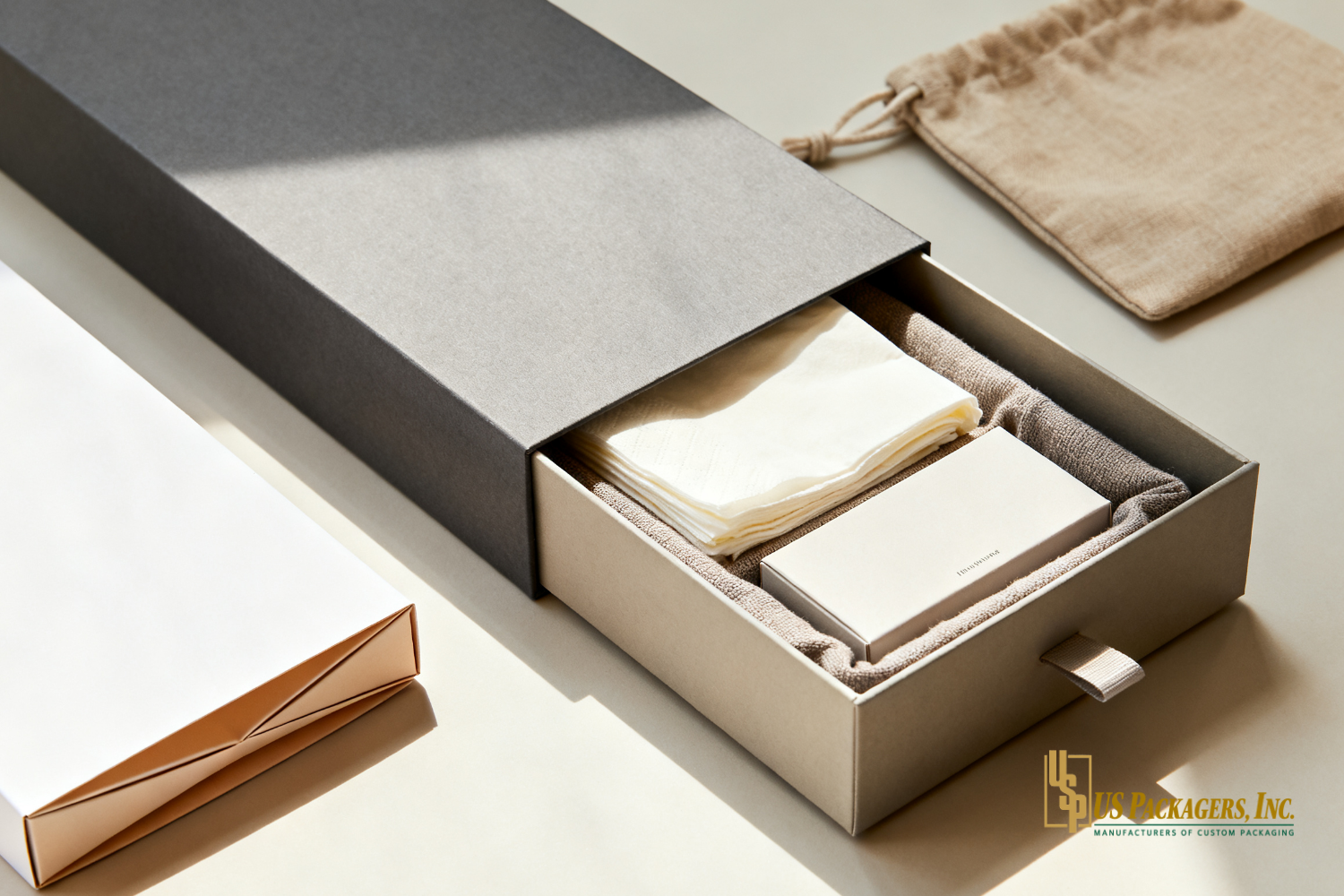
What packaging formats most consistently read as premium? Options that create physical heft and tactile contrast perform well: rigid boxes with fabric or soft-touch lamination, two-piece drawer boxes, magnetic-close boxes, and structured pouches. Add simple luxury cues — cotton ribbon, heavy-weight tissue, embossed edges, or an internal card — rather than layering every possible embellishment, which can feel cluttered.
Material choices have tradeoffs. Rigid boxes and specialty finishes elevate perceived value but increase cost and storage footprint. Folded cartons with reinforced inserts offer a good compromise: they look refined when well-executed and pack flat until needed. If sustainability is a priority, specify recycled-content boards or mono-material coatings that preserve recyclability while maintaining a refined surface.
Design Details That Protect Contents and Create Unboxing Moments
Before specifying custom printing or embossing, answer these practical questions: How fragile is the item? Will the package travel from a central staging area to guest rooms by hand or cart? Does the hotel prefer discreet branding for privacy-sensitive guests? Packaging design must protect the item during handling while enabling a simple, consistent unboxing that aligns with service staff routines.
Design recommendations for premium presentation:
Built-in inserts sized to items reduce movement and remove need for extra void fill.
Soft-touch interiors (tissue, velvet cut-outs) enhance tactile experience and conceal structural elements.
One clear branding touch — a subtle deboss, a small foil logo on the lid, or a branded enclosure card — preserves elegance without overwhelming the guest.
Consider modular kits: a single outer carton with interchangeable inner trays for different gift assortments streamlines storage while keeping presentation consistent.
Welcome-Gift Packaging Checklist: Match Occasion, Fit, Presentation, Handling, Delivery
Guest occasion — Define the recipient group and the reason for the gift (e.g., VIP welcome, honeymoon, corporate amenity). Packaging style and personalization should follow that definition.
Item fit — Measure each item and specify internal dimensions and insert geometry; confirm fragility requirements and choose protective features accordingly.
Brand presentation — Choose one primary visual cue (finish, closure, or card) and one tactile cue (ribbon, soft-touch lamination, tissue) to avoid visual clutter while signaling premium quality.
Operational handling — Verify how packages will be staged, stored, and transported to rooms; prefer fold-flat formats if back-of-house storage is limited.
Delivery method — Standard delivery by staff versus in-room placement at check-in influences closure type and discreetness of branding.
Personalization and timing — Decide which gifts require on-demand personalization (name tags, welcome notes) and whether that will be applied at the hotel or pre-produced.
Sustainability and disposal — Select materials with clear end-of-life expectations and avoid mixed-material combinations that confuse in-room recycling.
Budget bands — Establish price-per-unit ranges tied to guest segments; this helps prioritize materials and finishes that deliver the most perceived value.
Operational Planning: Staging, Storage, and Room Delivery
How packaging choices will affect operations is often overlooked. A visually stunning rigid box that requires significant storage or hand assembly during busy shifts can create friction. Plan staging workflows: receive packaging flat when possible, designate a small assembly station with clear instructions, and build quality checks into the process to avoid inconsistent presentation across shifts.
For hotels using centralized production for multiple properties or events, standardized formats with variable inserts allow different gifts to share the same outer box. That approach reduces SKU count and simplifies reordering.
Design and Production Planning For Scalable Premium Presentation
What is required to move from concept to production? Translate the checklist items into a concise spec sheet covering quantities, dielines, material samples, finishes, print proofs, personalization needs, and delivery logistics. Work with manufacturers to request prototypes or short-run samples before committing to large orders.
When production partners are involved, align specifications to manufacturing capabilities and the desired luxury cues. Specialty finishes such as soft-touch coatings, foil stamping, or custom-cut foam inserts require early coordination between design and production to ensure feasibility and consistency. For hotels seeking an integrated approach that combines design, sampling, and in-house manufacturing flexibility, specialized Luxury Packaging partners can bridge creative and operational requirements while preserving brand intent.
Businesses looking for additional packaging insights can also read Gift & Souvenir Packaging for more practical guidance.
FAQ: Common Questions Hospitality Teams Ask When Selecting Welcome-Gift Packaging
How Much Should Be Spent on Packaging Versus the Gift Item?
Answer: There is no single ratio that fits every program. Evaluate perceived value per guest segment: for VIPs, spend more on presentation to match expectations; for broad-scale gestures, prioritize cost-effective designs that still deliver a clear brand cue. Use the checklist to align decisions to guest profile and budget bands.
Can Luxury Packaging Be Made Sustainable Without Losing Premium Feel?
Answer: Yes. Use heavier recycled boards, mono-material coatings, uncoated or minimally coated surfaces, and natural fibers for ribbons and inserts. Design choices that prioritize texture and tactile contrast often communicate quality better than heavy glossy finishes.
Should Personalization Be Printed on the Package or Added as an Insert?
Answer: If personalization varies by guest, using printed enclosure cards or adhesive name labels applied at the property is more flexible and cost-effective than producing many uniquely printed boxes. Reserve printed exteriors for tiered programs with predictable volumes.
What Are Typical Operational Pitfalls When Rolling Out Welcome-Gift Programs?
Answer: Common issues include insufficient staging space, inconsistent assembly instructions, overcomplicated closures that slow delivery, and selecting materials that do not travel well between staging areas and rooms. Pilot small batches to uncover these problems early.
Packaging That Enhances Arrival Impressions and Protects Brand Standards
For hospitality businesses, US Packagers offers premium gift packaging designed to reinforce guest-first service while meeting operational needs. From welcome gifts and special occasion packages to VIP guest amenities and branded keepsakes, thoughtful packaging helps hotels and restaurants create memorable experiences that reflect their service standards. By working with experienced packaging specialists, businesses can align guest preferences, product protection, and brand aesthetics with practical production plans. Prototypes and careful quality checks help ensure that packaging meets presentation expectations, protects its contents, and can be produced consistently at scale.