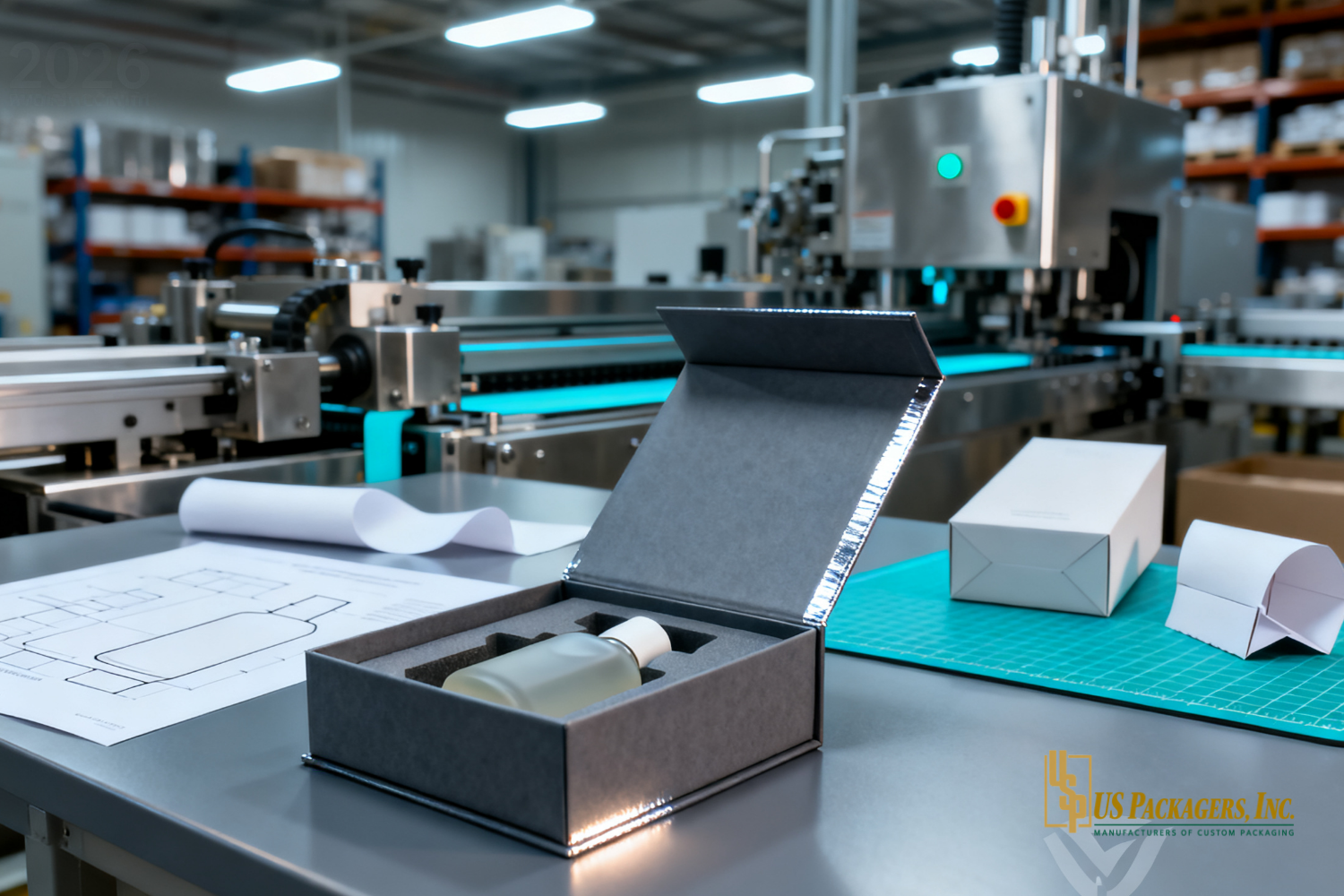
Increase packaging product value with design that ships
Many brands find the moment a customer first touches packaging reveals more than a product; it signals quality. Yes, packaging can increase perceived product value by aligning materials, finish, and unboxing with brand promise. Thoughtful packaging product value decisions often point toward Luxury Packaging choices that elevate perceived worth without changing the product itself.
Brands struggle because increasing perceived value requires balancing visual cues with functional needs. Packaging choices affect branding, product protection, customer experience, shipping costs, and production planning all at once. Teams often prioritize one area, like presentation, without evaluating how that choice performs in transit or scales in production, which creates gaps between the premium look and reliable delivery.
Start by clarifying which customer moment should feel premium and which constraints are nonnegotiable. Because US Packagers designs and manufactures in-house, packaging decisions can be tested against production realities early. That collaboration helps align branded packaging with protection and cost goals, creating stronger customer perception as brands scale.
Quick Answer
Yes. Packaging can increase perceived product value when materials, finish, structure, and unboxing are selected to match brand expectations and protect the product through distribution. Strategic branded packaging balances premium cues with practical constraints like shipping and production scalability.
Key Takeaways
Use material and finish choices to communicate quality at first touch without compromising protection.
Design for the customer moment that matters most—shelf, mail, or unboxing—and prioritize those cues.
Test packaging in transit to ensure premium presentation survives real-world shipping conditions.
Plan packaging choices with production scalability and cost-per-unit in mind.
Collaborate early between brand, design, and manufacturing teams to avoid rework and hidden costs.
Quick Business Snapshot
Category | Details |
|---|---|
Best For | Consumer brands seeking higher perceived value |
Business Size | Small to mid-sized brands and growing enterprises |
Primary Benefit | Stronger customer perception and brand alignment |
Implementation Complexity | Medium—requires coordination across design and production |
US Packagers Service Fit | |
Typical Environment | Retail displays, direct-to-consumer shipping, promotional launches |
Who Should Consider This Solution
Health and beauty brands preparing a premium product launch who need elevated unboxing.
Food and beverage producers introducing a gourmet line requiring upscale retail presentation.
Promotional product and entertainment companies creating collectible or gift-oriented packaging.
Manufacturers balancing higher perceived value with shipping durability and production scalability.
Marketing teams looking to align packaging design with brand storytelling and customer experience.
How packaging increases perceived value
Direct answer: packaging increases perceived value when form and function communicate the same promise. From a business perspective, the perceived value arises from sensory cues—material weight, tactile finishes, typography, and the reveal of the product during unboxing. These cues must be chosen to match the brand promise and the customer's expectation at the point of purchase or receipt.
Before selecting materials, decide which customer interaction matters most: a premium shelf presence, a compelling e-commerce unboxing, or a protective retail ship. That decision drives choices in board weight, coatings, and structural design. For example, heavier board and soft-touch coatings feel premium in hand but increase shipping weight and cost. Work with packaging design teams to prototype and test those tactile cues against transit tests to ensure the premium appearance survives distribution.
Balancing premium appearance with protection and logistics
Direct answer: a premium look must not undermine product protection or add unsustainable shipping costs. When assessing business impact, consider damage rates, return costs, and customer satisfaction alongside aesthetics. A fragile decorative insert that dents in transit will erode perceived value faster than a simple but sturdy presentation.
Practical tradeoffs include choosing internal supports, protective sleeves, or rigid boxes that protect while maintaining premium visuals. Structural design can hide functional elements—like foam or corrugated inserts—behind premium printed panels. Specify shipping tests early, quantify acceptable damage rates, and adjust designs to limit rework. Production planning benefits from early alignment: designs that require minimal post-press work typically scale more predictably and cost-effectively.
Material and finish choices that reliably signal quality
Direct answer: materials and finishes send immediate quality signals, but their selection should follow the intended customer moment and distribution profile. Textured papers, embossing, foil, and soft-touch varnishes are common premium cues that influence customer perception.
Each finish has manufacturing and handling implications. Embossing and foil stamping require additional die setup and careful registration, which affects per-unit cost. Soft-touch coatings increase perceived luxury but may scuff if not packaged correctly for shipping. Consider hybrid approaches: a premium outer sleeve with a practical inner shipping container or an insert that keeps decorative surfaces separate from postage handling. Engage a packaging design partner familiar with production tolerances to set realistic specifications that meet both brand and logistical needs.
Cost, scalability, and production tradeoffs
Direct answer: increasing perceived value often increases unit cost, so evaluate marginal gains versus production and fulfillment realities. The business decision is to target the portion of customers who will value and pay for the premium and scale production accordingly.
Prototyping at low volume helps validate consumer response before committing to larger runs. Consider print methods—digital print reduces setup costs for short runs, while offset or flexo becomes efficient for larger volumes. Also assess inner components like foam or molded trays for scalability. Early collaboration between procurement and manufacturing avoids specification changes after tooling or dies are ordered. Where appropriate, leverage in-house manufacturing options to iterate quickly and keep design changes under control while refining the premium experience.
Feature | Custom Packaging | Stock Packaging |
|---|---|---|
Brand alignment | High—fully tailored | Low—limited customization |
Perceived value | Higher with bespoke finishes | Moderate |
Unit cost | Higher initially | Lower for small runs |
Scalability | Controlled with design foresight | Immediate but generic |
A Practical Example
Direct answer: a mid-size cosmetics brand can achieve a luxury perception by combining a rigid box, soft-touch exterior, and a protective interior insert while controlling shipping costs. In this scenario, the business is launching a premium skincare line and must decide between a fully rigid package with custom foam inserts or a rigid box with molded pulp supports.
The packaging challenge is balancing first-touch luxury with sustainability and transit safety. The decision should weigh customer expectation for tactile luxury against fulfillment weight and unit cost. US Packagers' Packaging Design and in-house production capabilities support creating prototypes that test both unboxing and shipping. Prototypes allow adjustments to board weight, finish, and internal supports until the premium look consistently survives distribution, enabling a launch that aligns perceived value with product quality.
Practical Checklist
Define the customer interaction that delivers the most value (shelf, mail, or unboxing).
Select materials and finishes that match that interaction while noting manufacturing implications.
Prototype multiple options and run transit tests to verify presentation after shipping.
Review production scalability: assess print method, die requirements, and per-unit costs.
Plan protective inserts and packaging architecture to protect the product and preserve visuals.
Align procurement, design, and manufacturing teams before final specs to avoid rework.
Factor sustainability and disposal expectations into material choices to support brand values.
What US Packagers Recommends
Evaluate packaging decisions through four lenses: brand signal, protection, manufacturability, and long-term cost. Start with a clear statement of which customer moment must feel premium and prototype to verify that appearance survives transit. Where premium tactile cues are essential, consider layered solutions that combine a durable outer for shipping with a high-end inner presentation. Use Luxury Packaging and Packaging Design conversations early to lock in specifications that scale with demand while protecting margin and customer experience.
Common Mistakes to Avoid
Choosing finishes before testing transit durability; avoid premium surfaces that scuff in shipping by prototyping and testing.
Underestimating the cost impact of internal supports; evaluate inserts early to avoid surprises in unit cost.
Forgetting fulfillment constraints; ensure packaging fits automation and warehouse workflows to prevent expensive repacking.
Neglecting the unboxing sequence; design reveals intentionally so functional elements do not undermine the premium reveal.
Skipping collaboration with manufacturing; late-stage design changes increase tooling and lead to higher costs.
Frequently Asked Questions
Can premium packaging justify a higher retail price?
Yes, premium packaging can support a higher price when it aligns with customer expectations and enhances perceived product quality. The packaging must be consistent with the product’s positioning, survive distribution, and create a repeatable brand experience; otherwise, price increases risk customer disappointment and returns.
Which finishes create the strongest perception of luxury?
Finishes like soft-touch coatings, embossing, and foil accents commonly signal luxury, but effectiveness depends on execution and context. The chosen finish should match the product and distribution profile; for example, delicate foil work requires careful handling or protective outer layers to maintain its premium appearance in transit.
Is custom packaging always better than stock options for perceived value?
Custom packaging offers better brand alignment and higher perceived value, but stock options may suffice for short-term campaigns or limited budgets. Evaluate expected volume, target audience response, and the need for distinct brand differentiation before choosing custom over stock.
How should sustainability factor into premium packaging choices?
Sustainability matters to many consumers and can enhance perceived value when communicated clearly. Use recyclable or responsibly sourced materials and consider designs that reduce unnecessary components while preserving premium cues. Communicate material choices transparently to reinforce brand trust.
When should packaging be tested for shipping and handling?
Test packaging during the prototyping phase and after any significant design change. Early transit testing identifies weaknesses that affect both appearance and product safety, preventing costly redesigns and preserving the intended premium experience.
Packaging that pays attention to the customer moment
Perceived value is earned where the customer interacts with the package; prioritize that moment, then engineer protection and production accordingly. A clear plan that links sensory cues to logistical realities will preserve the premium impression through the supply chain and into the customer's hands.
Why Trust US Packagers
Attribute | Detail |
|---|---|
Founded | 2012 |
Industry Experience | 40+ years of packaging industry experience |
Capabilities | In-house design and manufacturing |
Philosophy | Customer-first packaging approach |
Expertise | Custom packaging development |
Industries Served | Promotional, entertainment, health & beauty, food & beverage |
Making smarter packaging decisions for premium products
At US Packagers, the best packaging decisions come from clear product, brand, and fulfillment criteria paired with realistic manufacturing tradeoffs, while prototypes and transit tests validate those choices. Consider customer touchpoints, protective requirements, and production scalability together, then refine materials and finishes to match both brand expectations and operational constraints. Explore Luxury Packaging while understanding how product, brand, customer experience, shipping requirements, and manufacturing considerations support long-term brand value.
