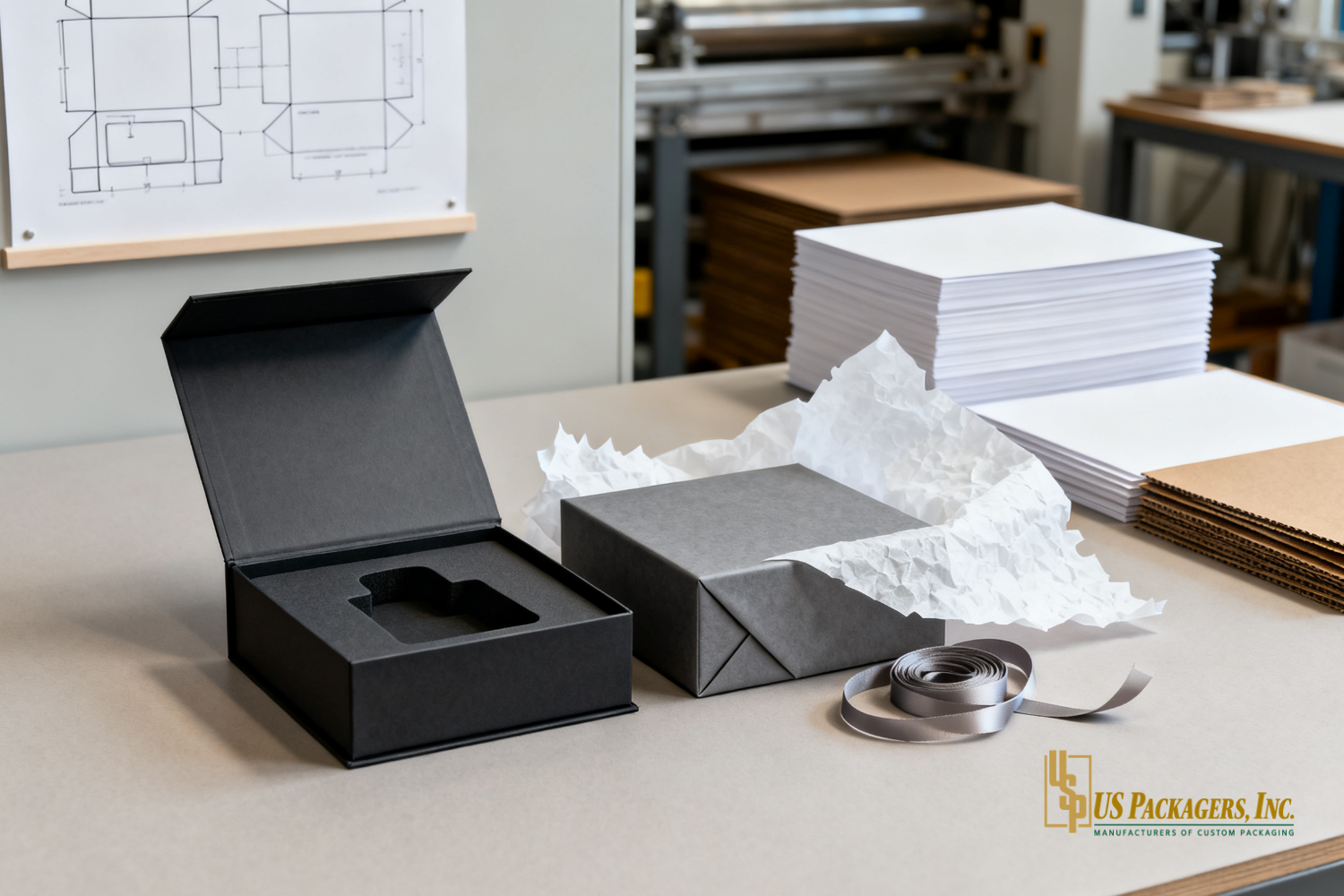
Premium Gift Box Packaging That Increases Perceived Value
Gift box packaging increases perceived value by creating a clear, immediate signal about a product's quality and the care taken by the brand. Perception comes from a combination of tactile cues, visual details, and the unboxing sequence. Choosing materials, finishes, internal supports, and structural features that align with the product and the recipient's expectations will raise perceived value more reliably than adding a single decorative element. This guide explains which packaging choices influence perception, which tradeoffs matter for budgeting and fulfillment, and how to evaluate options before committing to production.
What actually creates a premium impression and where to start
Decide the business objective first: is the goal to position the product as high-end, to elevate a promotional gift, or to reinforce a subscription or loyalty touchpoint? That objective determines which packaging investments pay off. For many brands the fastest path to premium perception is consistent alignment between the product, the box, and the moment the box is opened. Practical choices that contribute most include sturdy rigid or heavy-weight folding cartons, a clean closure action, a custom insert that holds the product securely, and finishes that read as intentional rather than decorative. When packaging is part of a gifting program, coordinate with the teams managing presentation, shipping, and returns to avoid disconnects between look and performance; this is especially important for brands using custom Gift & Souvenir Packaging for limited runs or promotional drops.
Which material and structure choices have the biggest impact
When evaluating premium gift box packaging, material selection and box structure determine both perceived value and functional protection. Rigid set-up boxes and high GSM folding cartons feel weighty and stable; those tactile impressions influence perceived value quickly. Liners and tray inserts add structure and create a composed presentation that suggests care and quality. Options to consider:
Rigid boxes - offer a premium feel and strong shelf appeal; ideal for fragile or luxury items where first impression matters.
Heavy folding cartons - cost-effective while still communicating solidity when paired with the right internal supports.
Custom inserts - foam, paperboard, or molded pulp align the product and create a deliberate reveal; they are often the single biggest perceived-value driver.
Closure and fit - magnetic or snug tuck closures provide a satisfying tactile moment that reinforces quality.
Balance these choices against shipping and storage constraints. Heavier rigid boxes increase dimensional weight for shipping and require more storage space. For nationwide gifting programs, factor freight costs and returns handling into the selection process.
Surface finishes and print techniques that change perception
Surface finish translates visual cues into perceived value. Spot foiling, soft-touch coatings, embossing, and selective gloss varnish attract attention without overwhelming the design when used with restraint. Printed graphics should reflect the brand’s tone; luxury does not always mean ornate. Minimal, well-executed design with high-quality inks often reads as more premium than dense patterns. Consider these practical rules:
Prioritize a single premium technique for small budgets rather than many lower-quality effects.
Test finishes on the actual substrate to confirm color fidelity and hand-feel.
Use inside printing sparingly to support a private message or brand story that complements the exterior.
How inserts, tissue, and small gestures compound value
Inserts and minor in-box elements disproportionately affect the unboxing experience. A shaped insert that secures the product, a subtle branded tissue wrap, and a short printed note or card communicate attention to detail. These items add little weight but create layered discovery during unboxing, which increases perceived value more effectively than larger single-line investments. For product groups with multiple components, custom compartmentalized inserts prevent shifting and preserve the presentation for the recipient.
Design-to-manufacturing tradeoffs for premium presentation
Translate design ambitions into manufacturable specifications early. Complex structural designs or expensive finishes may require tooling, custom dies, or minimum order quantities that change project economics. Early collaboration between design, operations, and procurement reduces the risk of late design changes that inflate costs. When a brand needs elevated presentation without a large upfront spend, consider simpler structures paired with premium finishes and inserts. Bringing production and finishing capabilities in-house or working with a partner who controls manufacturing can shorten feedback loops and improve consistency for small to medium runs. For brands preparing packaging briefs or RFPs, including dielines, sample expectations, and tolerance limits avoids ambiguity in quotes and prototypes. For implementation and longer-term program planning, consult with specialists in Luxury Packaging to align design intent, material availability, and production feasibility.
Measuring returns on presentation investments and testing before launch
Perceived value is a behavioral outcome. Validate packaging decisions with low-cost prototypes and small sample sends before full production. Use qualitative feedback from focus groups, unboxing videos, and internal stakeholders to identify friction in the reveal sequence. Track conversion lift or gift-redemption rates in controlled campaigns to quantify impact when feasible. Run A/B tests where logistics permit: compare two finish levels or insert options to determine which drives the intended recipient action. Prototype testing also surfaces manufacturing risks such as fit problems or finish issues that only appear once materials are combined at scale.
Businesses looking for additional packaging insights can also read Gift & Souvenir Packaging for more practical guidance.
Frequently asked questions about premium gift box packaging
Does premium packaging always require rigid boxes?
No. Rigid boxes are a strong signal, but heavy folding cartons with well-designed inserts and premium finishes can produce comparable perceived value at lower cost and reduced shipping weight. The choice depends on product fragility, brand positioning, and budget.
How much should a brand invest in packaging versus the product itself?
There is no fixed ratio. Allocate packaging budget based on the importance of presentation to the customer decision process and the expected lifetime value of the recipient. For gifting programs where the experience drives loyalty, a higher relative spend on packaging is often justified.
Are specialty finishes worth the extra cost?
Specialty finishes are worth the cost when they serve a clear brand purpose and are executed with quality. One well-chosen finish that aligns with brand tone will usually outperform several competing treatments applied inconsistently.
How should brands balance sustainability with premium presentation?
Sustainable materials can read as premium when applied thoughtfully. Choose recyclable or responsibly sourced substrates and avoid unnecessary layers. Communicate sustainability choices through discrete in-box messages rather than heavy printed claims to keep the aesthetic premium and honest.
Packaging planning for premium gifting programs
At US Packagers, we Create Premium Gift Packaging that balances product protection, brand presentation, and operational realities; collaborative planning across design, sourcing, and fulfillment helps ensure packaging investments produce measurable results for gifting programs and retail introductions.
