Trade Show Packaging Strategies to Improve Booth Engagement
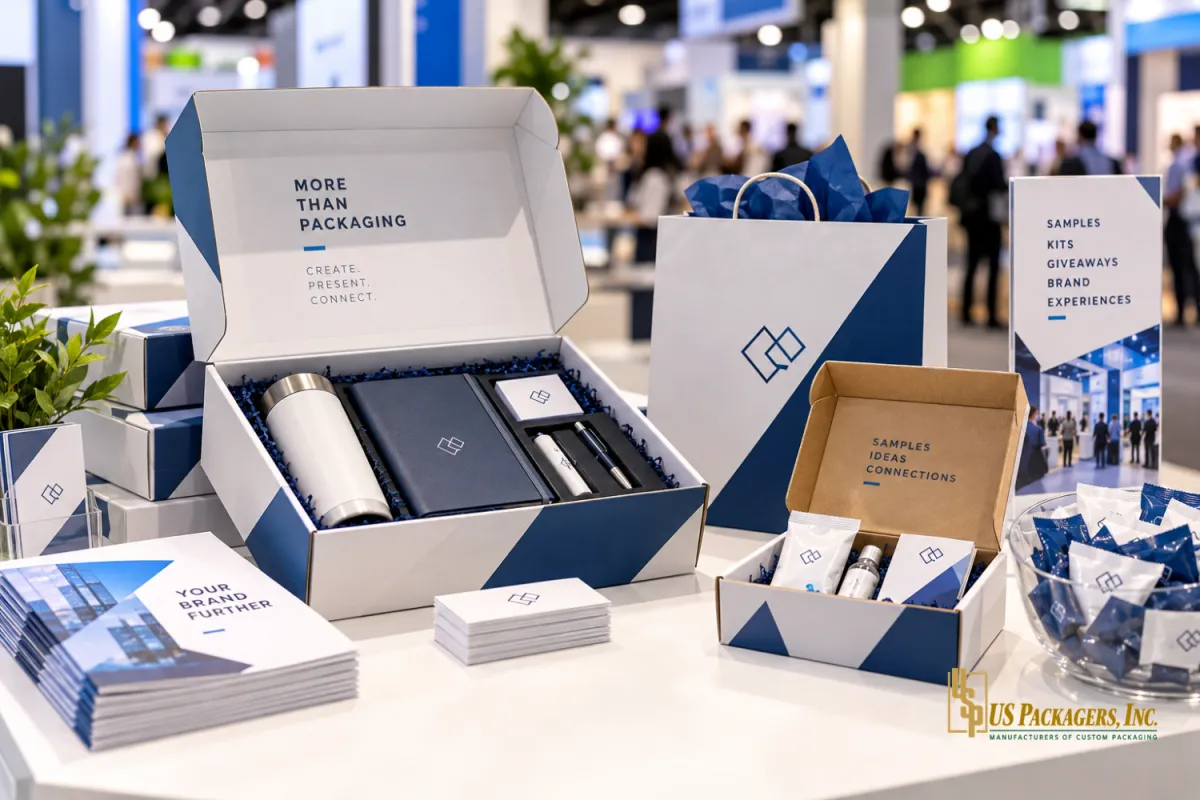
Well-planned trade show packaging turns a pile of promotional items into a guided experience: it helps control how visitors touch, learn about, and take products away from a booth. Thoughtful trade show packaging organizes product samples and literature, protects items in transit, reinforces brand presentation at the moment of handoff, and reduces staff time spent searching for materials. For teams preparing an exhibit, the most important early decision is what packaging must accomplish on the show floor versus what is purely about shipping and storage.
Match Packaging Goals to Booth Priorities
Which booth outcomes matter most: capture leads quickly, encourage product trials, enable easy giveaways, or create a premium unboxing moment? Packaging choices should follow that business decision. If fast distribution and neat presentation are the objective, create compact, single-handed-ready units that staff can hand to attendees without slowing traffic. If the goal is to drive memorable brand connections, consider a small branded kit that cues a multi-sensory reveal.
Planning packaging around goals also clarifies scope: does the exhibit need individual samples, multi-item exhibition kits, or larger demonstration sets? An organized event kit reduces mistakes, keeps inventory visible, and supports consistent brand delivery. For teams assembling multi-item displays, packaging designed specifically for events simplifies setup and teardown and helps staff manage replenishment during long shifts.
When packaging will be used both on the show floor and shipped to prospects after the event, design for both use cases simultaneously. That balance prevents over-engineering a shipping container that never sees the booth or under-designing a display piece that fails under repeated handling. Consider centralizing event packaging work into a repeatable solution such as an Event Kit Packaging approach to keep design and logistics predictable across shows.
Design Decisions that Directly Affect Attendee Interaction
Which design elements influence whether attendees pause and engage? Prioritize three areas: ergonomics, brand clarity, and sensory cues. Ergonomics covers size, weight, and how a package is opened at the booth. A package that fits comfortably in one hand, or that unfolds into a simple demonstrator, increases staff efficiency and attendee focus.
Brand clarity reduces friction. Clear label placement, unobstructed logos, and a simple call-to-action—whether a QR code, sample instruction, or tasting note—help attendees understand the next step without a staff explanation. Keep printed information concise and legible at a glance.
Sensory cues invite interaction. Texture, a subtle contrast in paper stock, or a restrained color pop can communicate premium positioning without requiring extra words. For food and beverage or health and beauty brands, consider materials and finishes that imply quality (for example, matte paper with a soft-touch lamination) while keeping handling and cost in mind.
Packaging formats that work on the floor
Single-serve sleeve or pouch: Ideal for food samples or single-use demos; staff can distribute quickly.
Multi-item kits with indexed compartments: Useful when booths need to hand out complementary items (sample, business card, coupon) while keeping them organized.
Display-ready boxes with quick-open lids: Enable a consistent unboxing moment and can double as countertop displays.
Logistics and materials: how implementation affects booth performance
Packaging choices made purely for aesthetics often fail during transport or repeated handling. Understand the production and logistics tradeoffs before finalizing design so the pack supports both manufacturing and event requirements. Paperboard and folding cartons are lightweight and printable but need internal supports for fragile items. Corrugated or rigid formats protect heavier or shape-sensitive products but add weight and shipping cost.
Decisions about materials and finishes also shape lead time, cost, and minimum order quantities. Planning early avoids rushed compromises that hurt booth performance. When packaging connects directly to operations—kitting, storage, and on-site replenishment—engage manufacturing and operations teams during design to verify dimensions, packing orientation, and how kits will be staged at the booth. For brands that need tailored shapes, protective inserts, or multiple SKUs in one kit, consider collaborating with a provider experienced in both design and production like Event Kit Packaging to align choices with on-site realities.
Trade show packaging planning checklist
Before finalizing materials or ordering a production run, review this checklist to reduce common failures at shows. Each item is actionable and tied to booth outcomes.
Define booth objectives: Note the primary attendee action (sample, signup, demo) and let that guide format and opening mechanics.
Decide distribution method: Handed directly by staff, picked up from a display, or mailed post-show; each needs different packaging considerations.
Set handling requirements: How many times will each package be handled? Design for repeated opening if needed.
Confirm dimensions and weight limits: Match packaging size to booth storage and allowable shipping weight.
Include clear branding and CTA placement: Ensure logos and instructions are readable from a short distance; avoid clutter.
Plan for inventory and replenishment: Create kitting quantities per shift and a simple restock map for staff use.
Test a prototype in-situ: Simulate busy booth conditions to check ergonomics and speed of distribution.
Verify shipping and reuse: If packaging must travel, confirm it performs in transit and can be reused across multiple events.
Budget for backup stock: Plan for extra kits and quick replacements to avoid running out mid-show.
Document setup and teardown steps: Include a labeled diagram or color-coded inserts so different staff can follow the same procedure.
Businesses looking for additional packaging insights can also read Event Kit Packaging for more practical guidance.
Common trade show packaging questions
How many kits or samples should a show plan for?
Plan based on expected foot traffic and target conversion: estimate the number of qualified leads, then size inventory to cover at least that many handouts plus a contingency. Also factor in distribution style—high-volume giveaways require more stock than targeted demos.
Should packaging be single-use or reusable for multiple shows?
Reusable packaging pays off if the design is durable and the brand will reuse the kits across several events. Single-use formats are appropriate for low-cost samples or where sanitation is a concern. Consider a hybrid: reusable outer packaging with single-use inner elements.
How can packaging speed up lead capture?
Use packaging to bundle what a sales rep needs for a conversation—sample, quick data sheet, and a pre-printed call-to-action—so staff can hand out a complete packet without searching. Color-coding or tabbed compartments helps staff find the right item fast.
How trade show packaging ties to event marketing goals
Trade show packaging strategy links marketing intent with practical production choices so exhibits perform consistently. Packaging designed for interaction reduces friction on the floor and reinforces brand positioning after attendees leave the booth. When packaging contributes to clear, repeatable staff processes and protects products through shipping and handling, it becomes a tool for both presentation and operations. For teams planning a show campaign, treat packaging as part of the marketing brief—define the desired visitor experience first, then translate that into formats, materials, and kitting requirements. At US Packagers, Event Kit Packaging and in-house production options can simplify iteration between prototype and final run while keeping the focus on booth performance.
