Wellness Product Packaging Best Practices: Five-part Framework for Protection, Labeling, and Brand Fit
Wellness product packaging must protect delicate formulations while reflecting brand values and meeting shopper expectations. Choosing packaging for supplements, topical treatments, aromatherapy, or ingestible wellness items is a three-way balancing act: protective performance, consumer-facing presentation, and practical manufacturing. This guide answers what wellness brands should know about packaging and provides an evaluation framework that clarifies tradeoffs before design or production begins.
Which Packaging Decisions Matter First for Wellness Brands?
Begin by defining product realities and business constraints. Ask whether the product is hygroscopic, light-sensitive, volatile, aerosolized, or requires dosing controls. Consider anticipated distribution channels such as direct-to-consumer, retail shelves, subscription boxes, or event sampling. Those facts drive core requirements for protective packaging and inform branding choices that influence materials and finishing options.
Effective health packaging starts with these nonnegotiables: protection during transit and storage, regulatory and labeling needs, and a clear user experience for application or dosing. Each of those influences whether to spec a glass dropper bottle, HDPE jar, sachet, stick pack, or a rigid, presentation-grade box. When brand presentation is a priority, ensure the chosen primary package still meets technical needs rather than the other way around. For practical design and production help, consider professional Health & Beauty Packaging partners early in the process: Health & Beauty Packaging.
Wellness Packaging Evaluation Framework: A Practical Decision Tool
Before committing to a format or material, run each candidate through a five-part evaluation. This framework helps compare options objectively and reveals hidden costs or risks.
1. Product compatibility
Assess chemical and physical interactions. Review how active ingredients respond to oxygen, moisture, heat, and UV light. For liquids that evaporate easily, look for barrier materials and secure closures. For powders or capsules, focus on moisture control and static. Compatibility rules out unsuitable substrates early and narrows down protective packaging choices.
2. Protection and logistics
Map the product journey from packing to customer use. Determine expected shock, vibration, stacking, and temperature extremes in your supply chain. Specify internal cushioning or secondary transit packaging where necessary. Protective packaging should be chosen to meet realistic handling scenarios to avoid damage-related returns or complaints.
3. Regulatory and labeling needs
Confirm mandatory labeling space and material requirements for ingredient lists, warnings, lot codes, and expiration dates. Ensure the chosen packaging provides a durable surface for permanent printing or applied labels that remain legible through shelf life and handling.
4. User experience and accessibility
Consider how customers will open, store, and use the product. Dosing aids, tamper-evident features, child-resistant closures, and clear instructions improve safety and satisfaction. Branded packaging that supports straightforward use increases repeat purchases and minimizes support requests.
5. Brand expression and sustainability tradeoffs
Decide which brand attributes matter most: a premium unboxing, a minimal ecological footprint, or performance-first engineering. Sustainable material choices may require different printing or finishing approaches and can affect barrier performance. Balance visual and tactile elements against functional needs so branded packaging does not compromise protection.
Material and Format Choices with Practical Tradeoffs
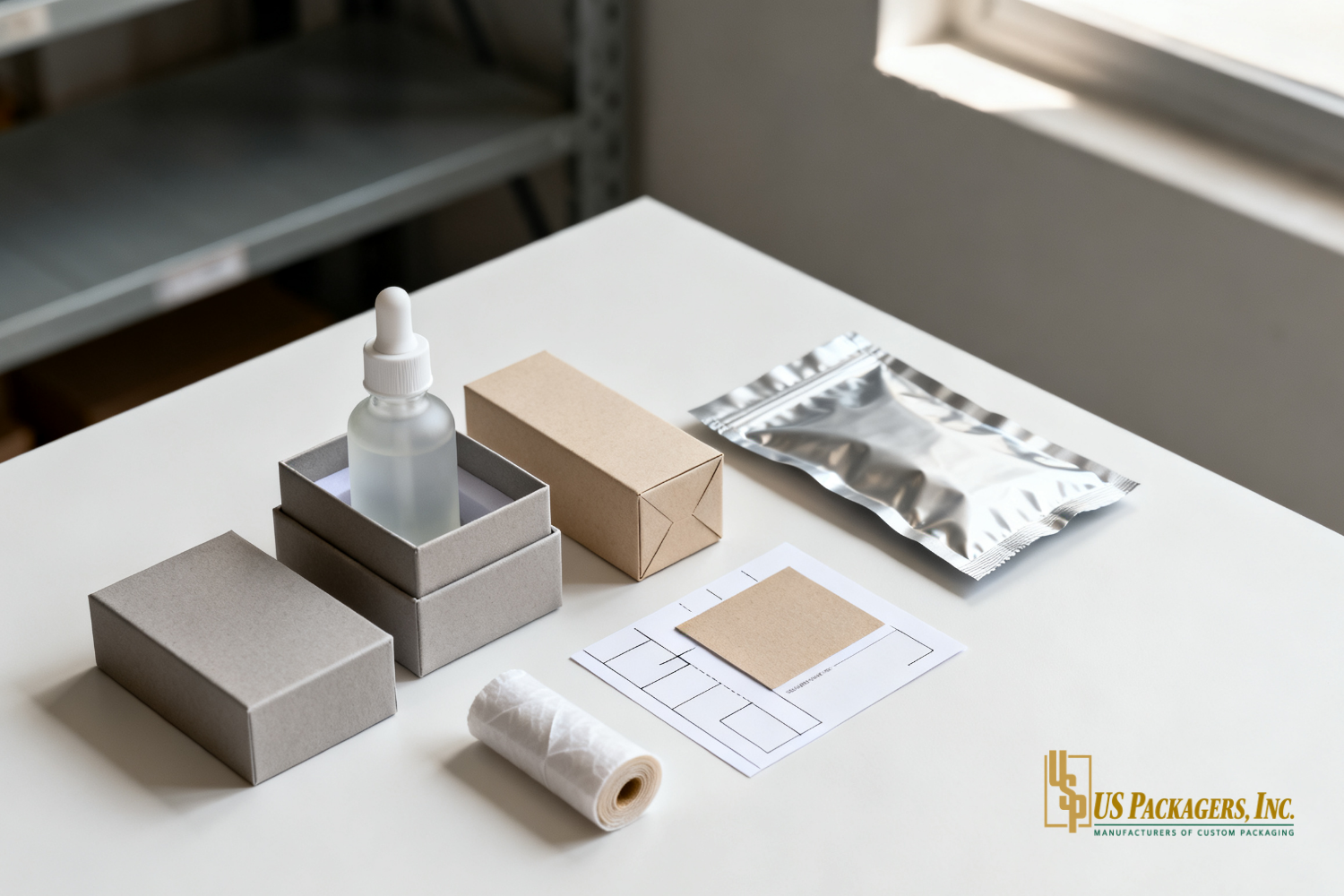
Selecting materials is a set of tradeoffs rather than a single correct answer. Common options include glass, plastics, coated paperboard, and flexible films. Each offers different levels of protective packaging, printability, weight, and recyclability.
Glass provides inertness and premium perceived value but is heavier and breakable; consider secondary protective packaging for shipped items.
Rigid plastics are durable and lightweight; choose food-grade, compatible resins and verify barrier needs.
Paperboard cartons are excellent for branded packaging and secondary protection; specify coatings or liners if moisture or grease resistance is required.
Flexible pouches can offer high barrier performance in a low-weight footprint but may limit stacked retail presentation.
Evaluate finishing options such as embossing, soft-touch coatings, or spot varnish with an eye on tactile brand impact and cost. Keep print areas functional for regulatory text. For prototyping and material testing, move from digital mockups to physical samples to validate color, fit, and closure performance.
Brands looking for additional packaging insights can also read Health & Beauty Packaging for more practical guidance.
Common Protective Packaging Details that Reduce Risk
After format selection, focus on these protective details. Use appropriate inner liners to protect fragile components, desiccants for moisture-sensitive items, and resealable closures for multi-use products. Where breakage is a concern, design secondary transit packaging that secures primary containers and prevents shifting during transport.
Quality control criteria should include drop testing, compression testing, and visual inspections for print alignment and closure integrity. Establish acceptance tolerances with manufacturers to avoid inconsistent batches that could affect shelf performance or brand perception.
Design and Manufacturing Considerations for Execution
Design choices must reflect manufacturing realities and cost constraints. Early collaboration between design, operations, and production reduces costly revisions. Confirm dielines, minimum order quantities, and print capabilities before finalizing art. Material availability and tooling needs influence lead times and budget, so include sourcing discussions in the planning stage.
When preparing for production, consider how branded packaging will scale across SKUs and seasonal variations. Consolidating dielines and shared components can reduce tooling costs and simplify inventory. For premium or limited-edition runs, discuss finishing options that create shelf impact without compromising protective performance. When moving from concept to production, work with experienced partners who offer in-house design and manufacturing to streamline iteration and maintain quality controls: Health & Beauty Packaging.
Frequently Asked Questions about Wellness Product Packaging
How should a brand choose between glass and plastic?
Choose based on product chemistry, weight tolerance, retail expectations, and sustainability goals. Glass is inert and premium but heavier and fragile. Plastics are lighter and more impact-resistant. Evaluate barrier and compatibility needs first, then weigh brand perception and logistics costs.
What role does labeling play in health packaging?
Labeling provides regulatory information, usage instructions, and brand messaging. Ensure sufficient durable surface area for required text and consider printed cartons for extensive information. Labels should adhere reliably over the product lifespan and through environmental changes.
Are sustainable materials always the right move for wellness brands?
Sustainability is important to many consumers, but material choices must still protect the product. Recyclable or compostable options can work well for certain formulations. Evaluate whether sustainable substrates provide needed barrier properties or whether hybrid approaches, such as recyclable outer cartons paired with high-barrier inner liners, offer a better balance.
When should tamper‑evident or child-resistant features be included?
Include tamper-evident features for consumables and child-resistant closures for products that could pose a risk if accessed by children. These features affect design complexity and user experience, so test them with real users and factor manufacturing costs into SKU planning.
Packaging readiness checklist before production
Confirm product compatibility with chosen substrates and closures.
Validate barrier performance for shelf life and storage conditions.
Allocate space for mandatory labeling and branding hierarchy.
Decide on tamper, child-resistance, and dosing features if applicable.
Request physical prototypes and run basic drop and compression tests.
Align on minimum order quantities, tooling needs, and material availability.
Plan secondary transit packaging to prevent damage during distribution.
How Practical Packaging Decisions Support Brand and Product Success
Wellness product packaging decisions should begin with product protection and user safety, followed by brand expression and sustainability considerations. A structured evaluation framework helps identify trade-offs between barrier performance, cost, and visual appeal, while early cross-functional collaboration reduces redesigns and ensures packaging serves as both a protective solution and an effective communication tool. At US Packagers, elevate your beauty packaging with packaging solutions that balance protective engineering and brand-focused design while supporting production requirements and future scalability.