What Makes Luxury Cosmetic Packaging Feel Premium: A Practical Evaluation Framework
Luxury cosmetic packaging feels premium when every choice reinforces the brand message without compromising function: substantial materials and refined surface treatments signal value; precise construction and satisfying closures create a tactile moment; and thoughtful inner structure protects the product while guiding the unboxing story. These sensory and structural cues are the primary drivers that separate upscale presentation from ordinary packaging. Practical tradeoffs include cost, manufacturability, sustainability, and shipping performance, so evaluate aesthetic goals alongside protection and scalability before selecting finishes or complex structures.
What sensory and design cues define luxury cosmetic packaging?
Luxury is perceived through sight, touch, and sound. Visual depth from rich inks, foil, or subtle embossing sets expectations at a glance. Soft-touch coatings, textured papers, and weighted lids communicate tactile quality. Mechanical cues such as magnetic closures, ribbon pulls, and seamless edges deliver a premium feel during handling. Consistency between outer artwork and inner components maintains credibility; a high-end box with a low-quality insert undermines the effect. For brands focused on health and beauty categories, delivering this cohesive sensory experience should sit alongside core product requirements like protection and regulatory labeling. Teams looking for tailored solutions can learn how packaging choices intersect with product needs through Health & Beauty Packaging.
A Practical Evaluation Framework for Luxury Cosmetic Packaging
Before specifying materials or finishes, use a simple framework to compare options objectively. Score each candidate across these nine criteria to balance brand objectives with production realities.
Brand Alignment — Does the look and feel match the desired market position and target shopper expectations?
Visual Impact — Color fidelity, foil or metallized effects, embossing clarity, and print quality.
Sensory Quality — Weight, texture, closure action, and unboxing choreography.
Protection & Fit — Internal supports, tolerance for product variation, and ability to withstand handling and transit.
Manufacturability — Complexity of dielines, need for custom tooling, and vendor capability to reproduce finishes consistently.
Sustainability — Recycled content, recyclability of materials and coatings, and potential tradeoffs with premium finishes.
Cost-to-Perceived Value — Does the packaging justify its incremental cost through lift in perceived value or price positioning?
Regulatory & Product Compatibility — Chemical compatibility with cosmetics, label space, and barrier requirements.
Scalability & Supply Chain Risk — Availability of specialty papers or foil, and how variations affect lead times and MOQ.
Use this framework during vendor selection and prototyping. A qualitative scorecard helps prioritize which premium elements are mission-critical and which can be simplified to control cost or reduce risk.
Materials and Premium Finishes that Read as High-End
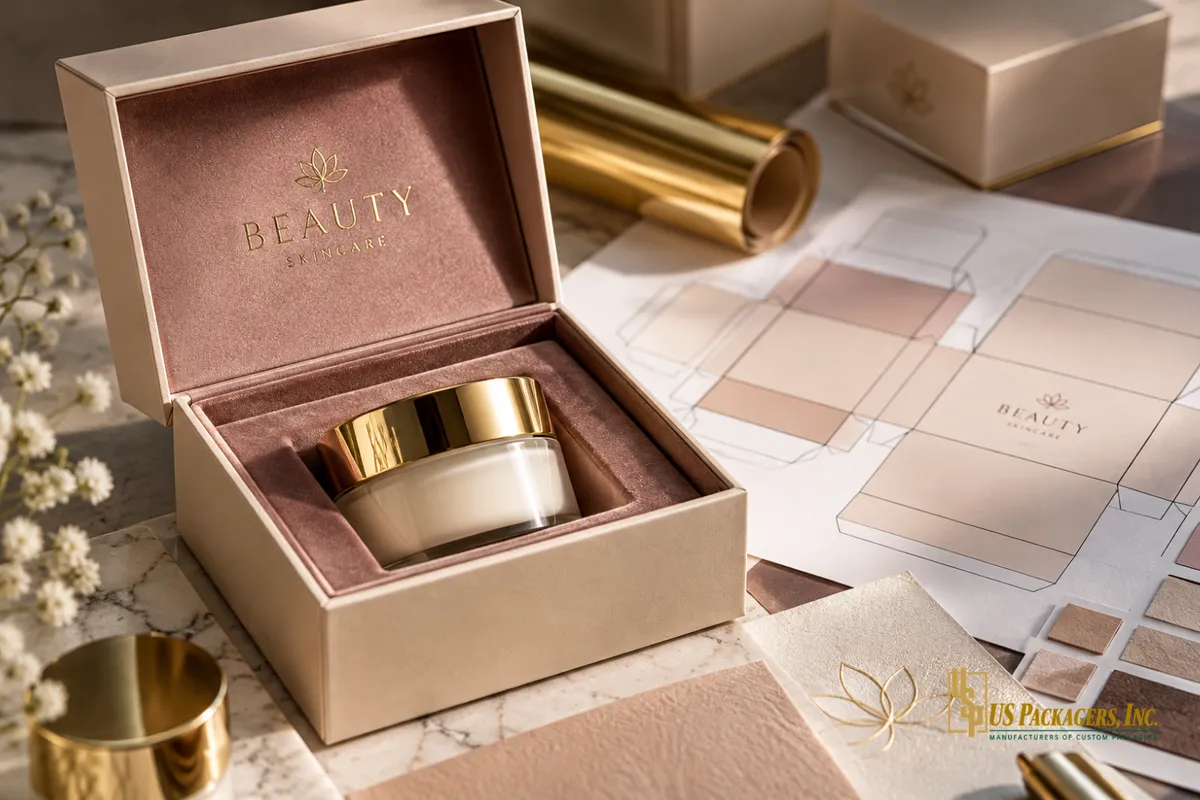
Material selection creates the first impression and affects every subsequent choice. For cosmetic boxes, consider rigid board for prestige lines because it delivers weight and consistent edges. High-caliper paperboard can be cost-effective while still supporting premium finishes for smaller runs. Common premium finishes include soft-touch lamination for a velvety feel, spot gloss or spot UV to create contrast, foil stamping for metallic accents, and embossing or debossing for subtle depth. Interior treatments such as flocking, satin lining, or molded inserts enhance perceived value and protect delicate components.
When selecting finishes, evaluate finish compatibility with printing methods and post-press operations. Some coatings reduce the ability of adhesives to bond or make secondary embellishments harder to apply. Similarly, specialty inks and metallized foils can shift color appearance under different lights or on varying paper stocks, so incorporate proofing and production samples into the decision process. Consider how chosen materials affect recyclability and consumer disposal if sustainability is part of the brand promise.
Design, Structure, and Manufacturing Considerations for Upscale Cosmetic Boxes
Luxury appearance depends on precise engineering. Dieline accuracy, panel tolerances, and quality of folding and gluing influence how cleanly a box presents on shelf and in consumer hands. Magnetic closures, hidden hinges, and multi-part rigid constructions require tight tolerances and sometimes custom tooling or inserts. That raises manufacturability questions to resolve early: can the production partner maintain consistent results at the brand's target volumes, and do in-line finishing processes exist to apply the chosen embellishments? Many brands find value in collaborating with manufacturers that handle design and production under one roof because it reduces miscommunication between design intent and production capability.
Balancing shipping protection and unboxing theatricality
Packaging must protect the product while preserving the unboxing moment. Luxury cosmetic packaging often uses rigid shells or nested formers that stabilize bottles, jars, or palettes. Internal inserts can be molded pulp, EVA foam, paperboard cradles, or corrugated structures depending on fragility, cost, and sustainability goals. Plan for distribution realities: lightweight delicate constructions may look premium in store but fail in transit unless supported by secondary shipping cartons and void-fill strategies. Design the outer and inner box as a system so the protective elements do not detract from the first tactile impression when the consumer opens the product.
Supply chain, testing, and sustainability tradeoffs
Choose finishes and materials with an awareness of sourcing risk and testing needs. Specialty papers and foils may have limited suppliers and minimum order quantities, affecting flexibility for seasonal launches. Critical tests include drop and vibration for transit, abrasion to simulate retail handling, and closure cycle testing for reusable boxes. For cosmetics, verify that adhesives and internal liners do not react with product formulations or release unwanted odors. If sustainability is a brand pillar, prefer mono-material constructions and water-based coatings that improve recyclability. Keep in mind that some premium coatings and metallic finishes complicate recycling streams, so document end-of-life considerations for informed decisions.
Businesses looking for additional packaging insights can also read Health & Beauty Packaging for more practical guidance.
Frequently asked questions about luxury cosmetic packaging
How much does a premium finish add to cost?
A direct answer is that premium finishes increase unit cost, but their value depends on positioning and volume. Evaluate finishes by estimating incremental cost per unit and comparing that to expected price positioning and customer perception. Use the evaluation framework above to determine which finishes are worth the investment and where simpler options can achieve a similar visual effect.
Can premium cosmetic boxes be recycled?
Some premium treatments are compatible with recycling while others are not. Water-based coatings and unlaminated papers typically recycle more easily than multi-material laminates or plastic films. When recyclability matters to consumers, prioritize paper-based solutions and single-material constructions, and ask suppliers for feedstock and coating composition details to assess end-of-life options.
Should prototypes be full-fidelity or proof-of-concept?
Both types have value. Early proof-of-concept prototypes validate dimensions, fit, and structural ideas quickly and affordably. Full-fidelity prototypes—using final materials and finishes—are essential before large production runs because they reveal how finishes behave under real manufacturing conditions. Budget for at least one full-fidelity sample when luxury finishes are part of the plan.
What questions should be asked of a packaging manufacturer?
Key questions include: Can the manufacturer reproduce the chosen finish at the target volume? What are minimum order quantities and tooling needs? How are color and finish consistency controlled? What testing and quality checks are standard? Does the partner provide prototyping and dieline review services? These questions clarify capability and risk early in the sourcing process.
Planning Premium Cosmetic Packaging with In-house Production
Coordinated design and in-house manufacturing help reduce translation errors between concept and production, enabling tighter control over premium finishes, prototyping cycles, and scale-up decisions. At US Packagers, Elevate Your Beauty Packaging by aligning material selection, structural design, and finishing details to create packaging that protects the product while delivering a consistent, premium brand experience. This integrated approach helps businesses streamline development, maintain quality standards, and make informed production decisions as their packaging requirements evolve.