When to Choose Luxury Presentation Boxes: Use Cases, Fit, Finishes, and Cost
Choose a premium presentation box when the packaging must do more than protect: it must signal value, control the unboxing moment, and align with the customer’s expectations for quality. Luxury presentation boxes are appropriate when product price, gifting context, brand positioning, shelf presence, or subscription experience depend on a tactile, memorable reveal. The choice should balance perceived value, protection needs, logistics, and budget so packaging supports the product rather than conflicts with it.
Which Business Situations Justify Luxury Presentation Boxes and Why Luxury Packaging Matters
Before selecting a format, identify the business outcome sought from packaging. Consider these common scenarios where premium presentation boxes make sense:
High price point or prestige positioning: When the product’s price and brand narrative require customers to feel a tangible premium at first touch.
Gift or limited-edition launches: Presentation boxes reinforce occasion-driven purchases and justify higher margins.
Retail or showroom display: Rigid presentation boxes create a clean, upscale shelf or counter presence compared with folding cartons.
Subscription or repeat-purchase touchpoints: A memorable unboxing increases perceived value and encourages retention and social sharing.
Delicate or multi-component items: Where protection during handling and an organized interior are critical to customer satisfaction.
Use the product’s commercial context to decide whether a premium box will be a cost or an investment in brand perception. If the package is the primary physical encounter between customer and brand, opting for luxury presentation boxes is often justified.
Core Selection Criteria: Structure, Protection, and Product Fit
Start with functional requirements. The wrong structure undermines both protection and perception.
Form factor and product dimensions: Measure the product, any accessories, and required clearance for safe removal. Presentation boxes are typically rigid, so internal tolerances matter. Rigid presentation boxes offer stability and a premium hand feel that folding cartons rarely match.
Protection level: Determine if the box needs only light protection for retail or stronger support for shipping. For fragile items, integrate foam or molded trays to prevent movement.
Orientation and reveal: Decide whether the product should lift out, slide open, or be revealed under a tray. The opening action is a major part of the perceived value.
Component count: Multiple components or layers (manuals, certificates, samples) require planned compartments and custom inserts to avoid a cluttered presentation.
Materials, Finishes, and Perceived Value
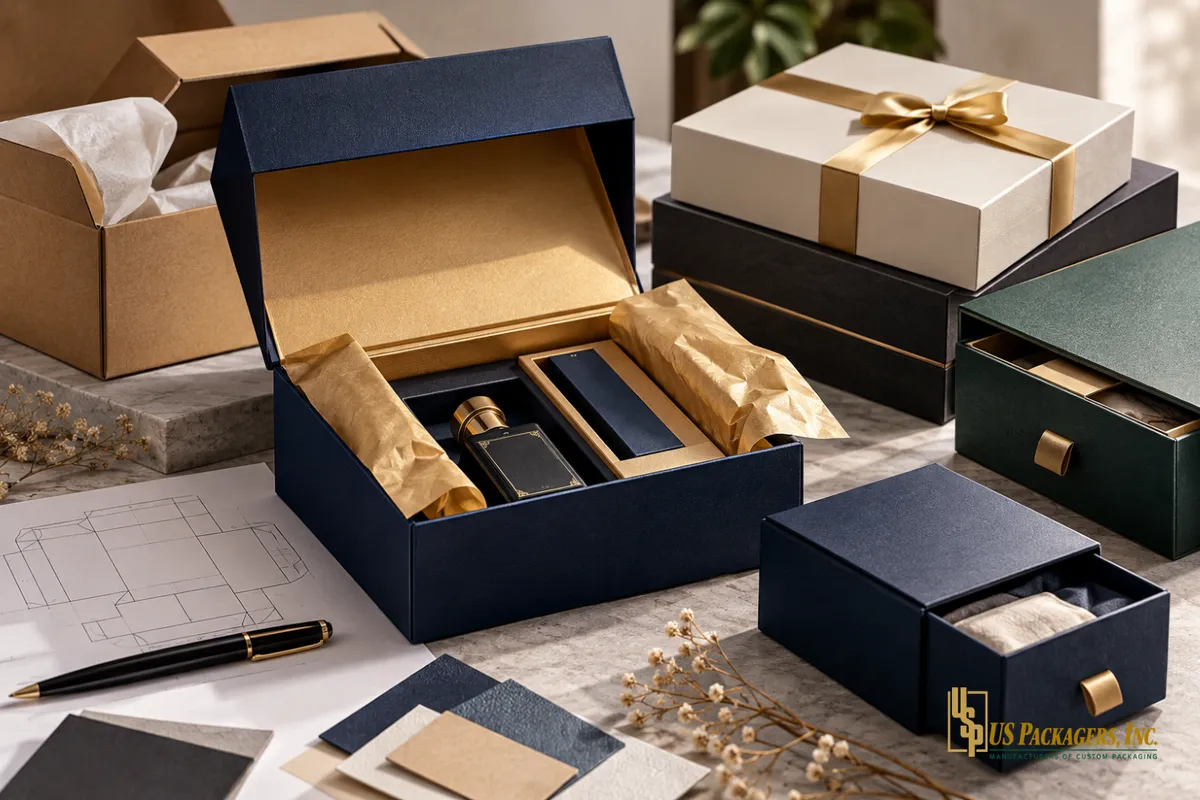
Material choices translate directly into sensory signals. Paper-wrapped rigid boxes, heavy board cores, and specialty finishes communicate different levels of quality.
Core materials: Rigid board wrapped in paper or specialty cloth creates a durable, weighty package. For lighter budgets, structured folding cartons with reinforced panels can approximate a premium look for lower volumes.
Surface finishes: Matte lamination, soft-touch coatings, and textured papers create a refined feel. Spot UV, foil stamping, and blind debossing add focal points without overwhelming the design.
Inserts and supports: Custom inserts—foam, molded pulp, or paperboard—keep the product secure and control the reveal. Custom inserts are a critical part of premium product packaging because they preserve the presentation over multiple touches.
Sustainability considerations: Recyclability and responsible sourcing affect material choice and should be aligned with brand values. Many brands aim for premium materials that are also recyclable or contain post-consumer content.
Cost Considerations and Packaging ROI Tradeoffs
Deciding on a premium presentation box requires weighing unit cost against lifetime value and marketing impact. Consider these practical tradeoffs:
Unit cost vs. perceived premium: Heavier boards and specialty finishes increase unit cost. These costs can be offset if the package supports higher price points, repeat purchases, or lower return rates.
Volume economics: Setup costs for tooling and dies are more significant for rigid boxes and custom inserts. Higher production quantities lower per-unit costs, so align the design with realistic volume forecasts.
Inventory and SKU management: Multiple colorways or seasonal variations add inventory complexity. Consider flexible elements—like printed sleeves or insert swaps—to reduce SKU proliferation.
Shipping and dimensional weight: Rigid boxes may increase package dimensions and shipping costs. Balance protective padding with efficient interior layout to minimize wasted space.
Presentation-Box Selection Checklist
Use this checklist when evaluating luxury gift boxes, rigid presentation boxes, or premium product packaging options. Each item is an actionable review point to confirm before signing off on design or production.
Product fit: Confirm internal dimensions with product and accessories in place plus 3–6 mm clearance where appropriate.
Movement control: Specify type and tolerance for inserts (foam, molded pulp, paperboard) and test with a prototype.
Opening experience: Define the reveal mechanism (magnetic closure, ribbon pull, lift-out tray) and validate ergonomics in a mockup.
Finish alignment: Select surface treatments for primary touch points; order finish samples to assess hand feel and color match.
Structural durability: Verify corner strength and hinge performance for repeated opening, especially for subscription or archival packaging.
Shipping readiness: Simulate shipping conditions and include secondary transit protection if necessary to preserve the presentation box during fulfillment.
Brand consistency: Ensure typography, color, and materials match broader brand guidelines and retail expectations.
Sustainability and disposal: Confirm recyclability and include clear guidance for consumers where appropriate.
Budget checkpoints: Align per-unit cost estimates with margin targets and minimum order quantity constraints.
Prototype approval: Approve a physical prototype before full production to catch fit and finish issues early.
Design and Production Considerations for Implementation
Translating a concept into manufacturable packaging requires early collaboration between design, product, and operations teams. Addressing these questions reduces revision cycles and unexpected costs.
Tooling and die requirements: Confirm if the design needs custom tooling for rigid boards or insert molding and budget for setup accordingly.
Print process and color control: Specify Pantone or process color targets, and request press proofs for critical color matches.
Sample and validation plan: Define how many sample iterations are acceptable and what tests will validate protection and appearance.
Supplier capabilities: Match the design with a manufacturer experienced in premium finishes and insert fabrication to avoid compromises during production.
When planning production, consider working with a partner that offers integrated design and in-house manufacturing to streamline revisions and maintain quality control. For brands ready to move from concept to production, Custom Luxury Packaging can help evaluate materials, finishes, and manufacturability early in the process.
Businesses looking for additional packaging insights can also read Luxury Packaging for more practical guidance.
Frequently Asked Questions About Luxury Presentation Boxes
When Are Rigid Presentation Boxes a Better Choice Than Folding Cartons?
Rigid presentation boxes are preferable when the package must convey weight and permanence, support high-end finishes, or provide repeated-use durability. Folding cartons can appear premium at lower cost but usually do not deliver the same tactile heft or structural stability.
How Important Are Custom Inserts for Premium Product Packaging?
Custom inserts are often essential. They secure components, keep the presentation organized, and control how the product is revealed. Without proper inserts, even an expensive outer box can feel cheap if the product shifts or appears poorly presented.
Can Luxury Presentation Boxes Be Designed To Reduce Shipping Damage?
Yes. A premium presentation box can be paired with a protective outer shipper or designed with reinforced internal supports to withstand transit. Early testing under expected shipping conditions will identify where reinforcement is needed without overbuilding the package.
Are Specialty Finishes Compatible With Sustainable Goals?
Many specialty papers and finishes have recyclable or lower-impact options. Selecting coatings and papers that meet sustainability objectives requires early material verification and clear labeling so consumers can dispose of materials correctly.
Planning Packaging That Reflects Brand Value and Protects Product Performance
Premium packaging plays an important role in strengthening brand identity, protecting products during transit, and creating a memorable customer experience. Businesses can improve product presentation with packaging that reflects their quality standards and appeals to their target audience. To find the right fit for your business, Explore Luxury Packaging at US Packagers and discover how premium presentation boxes can support brand positioning, maintain product protection, and deliver a consistent unboxing experience aligned with your commercial goals.