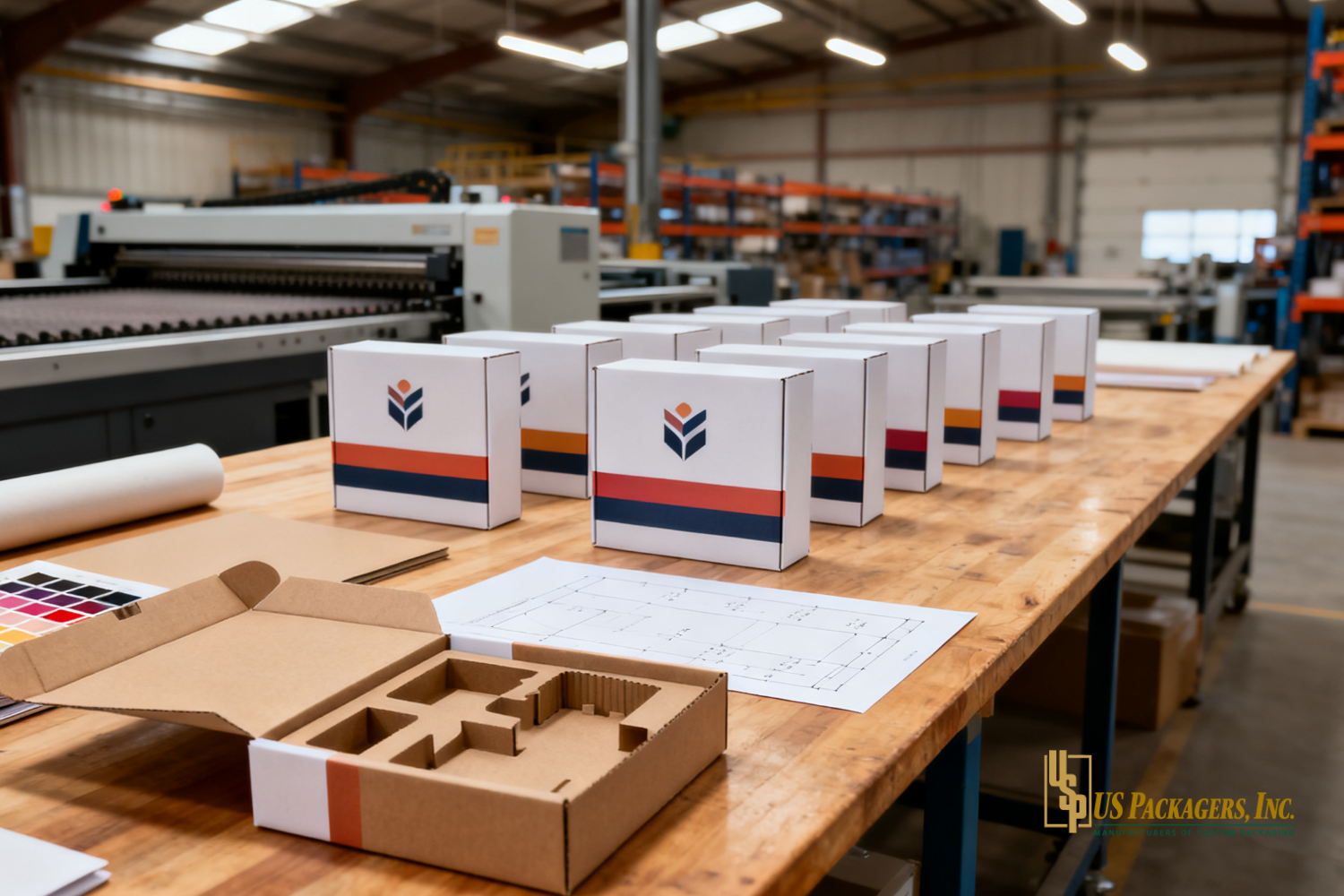
Packaging Brand Consistency: Reduce Confusion, Drive Trust
Packaging that changes appearance or quality across runs weakens recognition and reduces the value of a brand touchpoint. Packaging brand consistency matters because customers learn visual cues and unchanging presentation helps products stand out on shelves and in unboxing moments. For Promotional Packaging, consistent execution ensures every package reinforces the same brand promise.
Many businesses struggle with this decision because branding goals compete with production realities. Design shifts, supplier variation, cost pressure, shipping constraints, and seasonal SKUs all create tradeoffs between ideal aesthetics and practical manufacturing. The result is packaging that may protect product but fails to build a stable brand identity.
A practical approach prioritizes repeatable design systems, agreed tolerances, and clear brand rules before talking manufacturing processes. US Packagers uses in-house design and production to keep iterations aligned across runs, helping brands preserve recognition while meeting protection and logistics needs.
Quick Answer
Packaging consistency matters because it builds immediate visual recognition, reduces purchase friction, and strengthens customer trust. Packaging brand consistency lowers confusion across sales channels and supports predictable handling and protection from production through delivery.
Key Takeaways
Define core visual elements (logo placement, color palette, typography) that never change across SKUs.
Document production tolerances and material specifications to prevent quality drift between runs.
Align packaging design with fulfillment and shipping requirements to protect brand appearance in transit.
Use scalable decoration and dieline systems to maintain consistency as volumes change.
Regularly audit physical samples and customer feedback to measure consistency and trust.
Quick Business Snapshot
Category | Details |
|---|---|
Best For | Brands prioritizing recognition across retail, e-commerce, and events |
Business Size | Small to medium brands scaling production and SKU complexity |
Primary Benefit | Stronger brand identity and improved customer trust |
Implementation Complexity | Moderate — requires design rules, supplier alignment, and QA |
US Packagers Service Fit | Promotional Packaging and related development services |
Typical Environment | Mix of retail, direct-to-consumer, and promotional channels |
Who Should Consider This Solution
Brands launching multiple SKUs that must read as a cohesive family on shelf or online.
Marketing teams preparing seasonal promotions that need consistent brand cues.
Operations managers coordinating multiple production runs across vendors.
Food and beverage or health and beauty brands with strict protection and presentation needs.
Manufacturers supplying promotional products that represent client brands.
Consistency drives recognition and repeat purchase
Consistent packaging increases the chance a customer recognizes a product again and makes a repeat purchase. When visual cues such as color, logo placement, and structural features remain stable, shoppers form clear associations between the package and the product promise. That consistency reduces cognitive load at shelf and during unboxing.
From a business standpoint, consistent packaging also simplifies marketing and inventory management. Promotional campaigns, photography, and point-of-sale assets can be reused across product lines when the packaging system is predictable. That lowers creative costs and speeds campaign rollout.
Operationally, consistency requires control points: approved dielines, material specs, color targets, approved printers, and inspection criteria. Agreeing these early with manufacturing partners avoids rework and ensures branded packaging protects both the product and the brand image across distribution networks.
Design elements that support long-term brand identity
Design choices such as fixed grid placement for logos, a limited color system, and repeatable typography provide the scaffolding for packaging brand consistency. These elements should be defined as immutable within a brand guide so production teams know what aspects can change and what cannot.
Use scalable artwork templates that adapt to multiple box sizes or shapes without changing the brand relationship. For example, a consistent lockup or banding element can wrap around different cartons while preserving visual recognition. Material selection matters too; choosing a paperboard and finish that maintains color fidelity across suppliers reduces drift.
Designers must balance aesthetics with manufacturing feasibility. Some elaborate finishes make exact reproduction difficult across different print runs or vendors. Prioritizing repeatable processes, such as standard CMYK with a limited spot color palette, helps maintain visual consistency without sacrificing brand intent.
Operational processes to maintain consistent packaging across runs
Consistency is achieved through documented processes and quality controls rather than hope. Establish production checklists, sample approval steps, and clear acceptance criteria for color, registration, and structural integrity. These operational controls keep packaging brand consistency measurable.
Choose suppliers and partners with compatible equipment and proofing methods. Centralizing design files, dielines, and approved vendor libraries prevents accidental changes. Where possible, use in-house production to reduce handoffs and maintain tighter control over finishing and assembly.
US Packagers supports this approach with integrated design and manufacturing capabilities that simplify handoffs between design intent and final output. Businesses that standardize production tolerances and require pre-production samples find fewer surprises and more repeatable results.
Measuring consistency: what metrics to track and why
Measure packaging consistency with both qualitative and quantitative checks. Track variance rates in print color, registration, and structural dimensions. Record percentage of units passing inspection, customer complaint trends related to packaging, and returns where packaging contributed to damage.
Customer trust is a softer metric but just as important. Monitor unboxing feedback, review language that mentions packaging, and include simple questions in post-purchase surveys about perceived quality and brand alignment. Over time, declines in these metrics often correlate with inconsistent packaging execution.
Implementing regular sampling at batch start, mid-run, and end-of-run captures drift early. Combine this with supplier scorecards and corrective action plans to address recurring issues. These practices turn subjective assessments into actionable operations workstreams that maintain a consistent customer experience.
Cost and scaling considerations for consistent packaging
Consistency usually increases predictability, which can reduce waste and lower costs over time, but initial investments are often needed. Standardizing dielines, bulk purchasing of specified board stocks, and committing to consistent print processes help drive price stability as volumes grow.
Balancing customization with economies of scale requires tradeoffs. Highly bespoke structures or expensive finishes can be harder to reproduce consistently and may increase per-unit cost. Evaluate which brand elements drive recognition and prioritize those for high-fidelity reproduction while simplifying less critical details.
As production scales, plan for version control and SKU governance. Establish who can approve design changes and implement a change log that links artwork revisions to production batches. These steps protect the brand as product lines expand and new channels demand different pack formats.
A Practical Example
Situation: A health and beauty brand is expanding from four SKUs to twelve and wants a uniform in-store presence without increasing damage rates in transit. Packaging challenge: New sizes require different dielines and printers, raising the risk of inconsistent color and logo placement. Decision: Whether to keep a single visual system across all formats or treat each SKU as unique.
Using Promotional Packaging services, the brand can establish a master artwork system with fixed logo zones, color bands, and structural guides. Production samples from in-house runs help verify how the designs scale and hold up in shipping. This approach preserves brand identity while allowing operational teams to optimize protection for each SKU.
Custom vs Stock Packaging: A comparison
Feature | Custom Packaging | Stock Packaging |
|---|---|---|
Brand Alignment | High — tailored visual identity | Low — limited branding options |
Consistency Control | High — defined dielines and specs | Variable — depends on vendor batches |
Cost at Low Volume | Higher setup cost | Lower per unit |
Scalability | Better for growing SKU families | Faster availability |
Protection & Fit | Tailored for product | General fit |
Practical Checklist
Define immutable brand elements: logo placement, primary color values, and typography scale.
Create master dielines and scalable artwork templates for each structural family.
Specify material and finishing tolerances, including color targets and approved substrates.
Establish a pre-production sampling protocol with signed approvals before full runs.
Implement supplier scorecards and routine audits to monitor drift between batches.
Collect and track customer feedback related to packaging appearance and protection.
Businesses evaluating this packaging decision often benefit from Promotional Packaging when balancing branding, product protection, and manufacturing considerations.
Businesses looking for additional packaging insights can also read Promotional Packaging for more practical guidance.
What US Packagers Recommends
Consistent packaging begins with disciplined design rules tied to production realities. Define which visual elements are fixed and which can vary by format, and document material and print tolerances that suppliers must meet. In-house pre-production sampling reduces surprises, and centralizing artwork files prevents accidental changes. For most growing brands, a hybrid approach works best: preserve high-fidelity branding on primary elements while simplifying secondary finishes that add cost or variability. Over time, these practices protect the brand, reduce customer confusion, and improve trust across channels.
Common Mistakes to Avoid
Changing core brand elements between runs — avoid by locking logo placement and color values in a brand spec.
Relying solely on digital proofs for color approval — request physical print proofs to catch material-driven shifts.
Skipping supplier qualifications — set minimum acceptance criteria and audit new vendors before production.
Underestimating shipping impact — test packed samples under realistic handling to preserve presentation on arrival.
Poor version control — use a governed approval workflow to prevent unauthorized artwork changes.
Frequently Asked Questions
Why is packaging consistency important for brand identity?
Packaging consistency reinforces recognition and reduces shopper confusion, which supports faster purchase decisions and repeat buying. When visual cues remain predictable across channels and SKUs, marketing investments convert more effectively because customers form stable associations between packaging and product quality.
How does consistent packaging affect customer trust?
Consistent packaging signals reliability and attention to detail, which builds customer trust. If packaging quality fluctuates, customers may question product consistency. Measuring unboxing feedback and return reasons helps link packaging performance to perceived trust.
Can small brands achieve consistency without large budgets?
Yes. Small brands can prioritize a few immutable brand elements and use scalable artwork templates to maintain recognition while keeping costs controlled. Standardizing materials and limiting high-variation finishes delivers noticeable consistency without large upfront investment.
What production controls help prevent color and registration drift?
Pre-press approvals, specified print processes, color targets, and physical proofs are key controls. Setting acceptable tolerances and documenting inspection steps ensures that print vendors produce consistent results between runs.
When should a brand choose custom packaging over stock options?
Choose custom packaging when brand recognition, fit, or protection matters and when the long-term value of consistent presentation outweighs higher initial setup costs. Custom options allow precise brand expression and better control over repeatability across runs.
Final thoughts on packaging brand consistency
Consistency in packaging is a strategic investment: it turns a single product touchpoint into a reliable signal for the brand. Prioritize repeatable design rules and production controls to protect that signal as the business grows.
Why trust US Packagers
Founded in 2012
More than 40 years of packaging industry experience
Handcrafted custom packaging with an in-house design and manufacturing approach
Customer-first packaging philosophy
Custom packaging expertise across multiple industries
Experience supporting Promotional Products, Entertainment, Health & Beauty, and Food & Beverage brands
Consistent Presentation, Consistent Results
US Packagers focuses on creating packaging systems that preserve brand identity across every production run while meeting protection and distribution needs. A disciplined approach to design rules, material specs, and production approvals reduces variability and strengthens customer trust, and when brands are ready to solidify their packaging strategy they can Create Promotional Packaging to begin aligning design and manufacturing into a single, repeatable system.
